Top 10 Ideas to Furnish Your Bathroom in 2025 (Spec-Ready for Multi‑Unit and Hospitality)
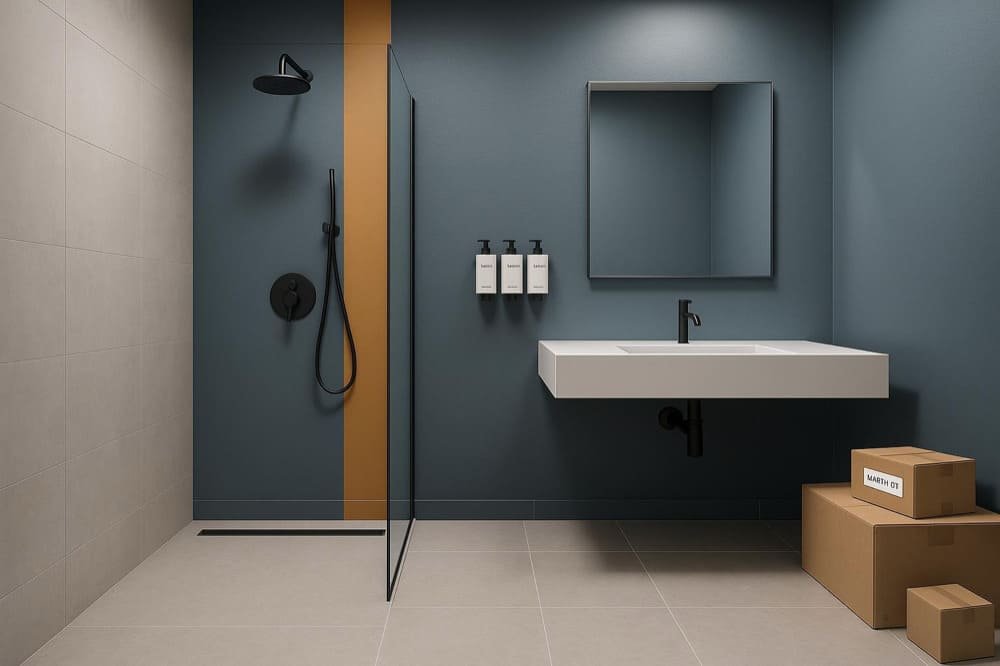
Modern hotels and multi‑unit developments don’t just need beautiful bathrooms—they need compliant, durable, and easy‑to‑install solutions that reduce total cost of ownership and keep guests happy.
Here are ten procurement‑grade ideas for 2025, each with practical specification cues, compliance anchors, risks to watch, and rollout notes you can plug into BOQs.
1) WaterSense‑aligned low‑flow fixtures and touchless faucets
Why it matters: Water and energy use are persistent OPEX levers, and touchless fixtures improve hygiene while reducing mishandling. WaterSense‑labeled products are independently certified to be at least 20% more efficient while maintaining performance.
What to specify:
- Toilets: WaterSense‑labeled tank‑type units. As of 2025, the WaterSense toilets v2.0 update (originally planned for July 1, 2025) is paused; continue to verify label status before procurement.
- Faucets: Private lavatory faucets at ≤1.5 gpm; many hospitality designs use ≤1.0–1.2 gpm aerators—but validate user experience and basin size.
- Showerheads: WaterSense‑labeled models typically at ≤2.0 gpm.
- Urinals: WaterSense‑labeled at ≤0.5 gpf; consider waterfree where appropriate.
Compliance anchors and updates:
- See the US EPA’s consolidated guidance in the Product Specifications (US EPA) and the program page for Bathroom Faucets (US EPA, 2025 guidance). For toilets, the 2024 v2.0 specification PDF and 2025 pause are documented on EPA pages and in trade coverage such as the ASPE Pipeline note on toilet spec revisions (2024).
Cost/lead‑time notes:
- WaterSense‑labeled SKUs are widely available; lead times vary by finish. Expect 4–10 weeks for large orders; confirm factory capacity.
Risks/pitfalls:
- Dual‑flush models must meet full‑flush limits; with the v2.0 pause, always confirm current label eligibility.
2) ADA‑compliant, barrier‑free showers with linear trench drains
Why it matters: Accessibility is both a compliance requirement and a guest experience win, especially for mixed‑use hospitality/residential projects.
What to specify (2010 ADA Standards):
- Roll‑in shower interior clear space commonly ≥30 in x 60 in; threshold ≤1/2 in.
- Grab bars: 33–36 in AFF; side bar ≥42 in; rear bar ≥36 in.
- Door clear opening: ≥32 in at 90°.
- Toilet seat height: 17–19 in AFF; clearances per the toilet room diagrams.
Compliance anchors:
- The U.S. Access Board’s Chapter 6 guidance on Bathing Rooms (U.S. Access Board, 2010 Standards) and Toilet Rooms (U.S. Access Board, 2010 Standards) distill the core dimensions and clearances.
Cost/lead‑time notes:
- Barrier‑free trays with linear drains and coordinated glass can be prefabricated; allow 6–12 weeks, plus field verification.
Risks/pitfalls:
- Controls must be reachable without interfering with grab bars; verify slopes to avoid ponding and ensure trench drain capacity for your selected flow rates.
3) Slip‑resistant, hygienic flooring and wall systems (ANSI A326.3)
Why it matters: Wet‑area slip resistance is a safety and liability priority. Large‑format porcelain tile with minimized grout reduces cleaning burden.
What to specify:
- For level interior wet areas, select tile tested to wet DCOF ≥0.42 using ANSI A326.3. Favor large formats and epoxy grout where hygiene is critical.
Compliance anchors:
- The Tile Council of North America’s overview of the ANSI A326.3 wet DCOF method clarifies that ≥0.42 is the comparison threshold for interior level wet areas.
Cost/lead‑time notes:
- Popular lines in matte finishes are broadly available; allow 4–8 weeks for bulk orders and match dye lots.
Risks/pitfalls:
- DCOF alone doesn’t guarantee safety—maintenance, contaminants, footwear, and slopes all matter. Document cleaning protocols.
4) Durable surfaces and finishes (porcelain/mineral solids; PVD or powder‑coated metals)
Why it matters: High‑touch fixtures and vanity tops suffer from corrosion, scratching, and cleaning chemicals. Durable substrates and coatings reduce defects and replacements.
What to specify:
- Vanities and surrounds in engineered stone or solid surface/mineral composites with low porosity.
- Faucets/Accessories with physical vapor deposition (PVD) finishes for enhanced scratch/corrosion resistance; powder coat for select aesthetic applications.
Standards anchors:
- For corrosion and water resistance evaluation, reference ASTM methods such as ASTM B117 neutral salt spray and ASTM D870 water resistance practice. Many manufacturers describe PVD process benefits; e.g., hansgrohe’s technical page on PVD finishes explains durability mechanisms.
Cost/lead‑time notes:
- PVD in matte black or brushed brass is common but can add cost/lead time. Align finish choices across SKUs to consolidate supply.
Risks/pitfalls:
- Don’t cite salt‑spray hours without manufacturer test data. In coastal sites, confirm finish warranties and care instructions.
5) Prefabricated vanities and modular wet‑walls/pods
Why it matters: Offsite fabrication compresses schedules and reduces onsite defects via factory QC. Standardized hookups simplify installation sequencing across units.
What to specify:
- Moisture‑resistant substrates (marine‑grade plywood/treated MDF), integrated plumbing chases, standardized mounting points, and engineered quartz/porcelain tops.
Evidence and anchors:
- Industry and offsite construction bodies note schedule acceleration and defect reduction from pods/wet‑walls. See NIBS and supplier briefs; for hospitality case context, HotelBusiness and specialist providers like Interpod publish adoption data and process notes.
Cost/lead‑time notes:
- Prefab units typically require shop drawings and mockups; plan 8–16 weeks from approval to delivery. Coordinate crane/lift logistics.
Risks/pitfalls:
- Local code acceptance, tolerances at site interfaces, and waterproofing transitions must be clearly detailed.
6) Smart controls: digital showers, occupancy‑linked ventilation/lighting
Why it matters: Stable temperatures and responsive ventilation reduce complaints and can support water/energy goals. Occupancy sensors help avoid wasted run‑time.
What to specify:
- Thermostatic mixing valves compliant with ASSE 1017/1070 integrated with digital shower controls; occupancy sensors tied to exhaust and lighting.
Technical anchors:
- Manufacturers document anti‑scald stability and commissioning requirements. For context on TMV standards, consult reputable technical literature from major brands; e.g., Chicago Faucets publishes ASSE‑compliant valve documentation, and global approvals such as WRAS confirm performance expectations.
Cost/lead‑time notes:
- Digital systems add commissioning time; budget for controls integration and user interface testing.
Risks/pitfalls:
- Power reliability, water management plans (legionella), and user training are essential—align with WELL guidance where applicable.
7) Coordinated finish packages across units (SKU discipline)
Why it matters: Consolidating finishes (e.g., all matte black PVD across faucet, shower, accessories) simplifies maintenance, spares, and reorders for multi‑year operations.
What to specify:
- Cohesive finish/fixture families and documented SKU lists, finish codes, and O&M spares.
Anchors and context:
- Hospitality design coverage frequently highlights cohesive finish strategies for durability and guest perception. Trade outlets like Hotel Management and Hospitality Design publish trend analyses helpful for stakeholder buy‑in.
Cost/lead‑time notes:
- Reduce SKU proliferation to shorten lead times and mitigate discontinuation risk; hold 2–3% spare parts inventory across critical SKUs.
Risks/pitfalls:
- Over‑customization increases lead time and maintenance complexity. Standardize wherever possible.
8) Amenities and bulk dispenser programs (tamper‑resistant, sustainable)
Why it matters: Bulk amenity programs cut plastic waste and costs compared to single‑use minis, and many jurisdictions are restricting single‑use hotel toiletries.
What to specify:
- Locking, tamper‑resistant dispensers with sealed cartridges; premium branded formulations; back‑of‑house refill and cleaning protocols.
Regulatory and evidence context:
- States like California and New York have enacted restrictions on single‑use hotel toiletries, accelerating the shift to bulk systems. Industry guides from hospitality suppliers outline maintenance and guest‑experience best practices.
Cost/lead‑time notes:
- Dispenser hardware is quick to source; allow 3–6 weeks for bulk procurement and branding.
Risks/pitfalls:
- Hygiene concerns and perception of luxury—mitigate through regular cleaning schedules and clear guest communications.
9) Packaging, QC, and “room‑in‑a‑box” kitting
Why it matters: Transit damage and missing parts are silent cost drivers. Kitting by room reduces touches onsite and speeds installation.
What to specify:
- ISTA‑tested packaging (e.g., Series 3A/3B/6 as applicable), reinforced corrugate, adequate cushioning, carton labels with lot traceability, and pre‑shipment inspections. Bundle all SKUs per room into labeled kits.
Evidence anchors:
- Transit‑tested packaging through UL/ISTA frameworks is widely adopted in fragile goods supply chains. See UL’s overview of ISTA packaging test services (UL, current program page) and ISTA’s process standards index. These programs help reduce damage and returns when applied correctly.
Also great for bundled sourcing:
- For multi‑unit or hospitality projects seeking factory‑direct bathroom packages with consolidated kitting and export‑grade QC, consider ChinaBestBuy. Disclosure: ChinaBestBuy is our product.
Cost/lead‑time notes:
- Kitting accuracy requires robust BOMs; allow 2–4 weeks for packaging development and sampling before mass pack.
Risks/pitfalls:
- Site storage and sequencing—plan buffer space and phased deliveries aligned to floor stacks.
10) Logistics planning for multi‑unit rollouts (global sourcing)
Why it matters: Even perfect specs fail without disciplined logistics. Mixed containers, phased deliveries, and realistic buffers de‑risk schedules.
What to specify:
- Consolidation plans, container loading diagrams, cross‑dock/transload options, site storage conditions, and real‑time tracking. Typical China sourcing timelines: manufacturing 4–12 weeks; ocean 4–6 weeks; inland/customs 1–2 weeks—plan 10–20+ weeks door‑to‑door.
Evidence anchors:
- FF&E logistics best‑practice sources (e.g., Curri’s guides and EY project logistics papers) emphasize consolidation, cross‑dock, and schedule buffers for smoother rollouts.
Cost/lead‑time notes:
- Build 10–15% schedule float into international legs; book carriers early around peak seasons.
Risks/pitfalls:
- Customs holds, port congestion, and site congestion; mitigate with phased delivery plans and clear receiving SOPs.
Implementation checklist (quick use):
- Map each idea to standards in your BOQ: WaterSense, ADA, ANSI A326.3; note WELL/LEED goals.
- Consolidate finishes and fixtures to cut SKUs and lead time.
- Require ISTA‑tested packaging and room‑in‑a‑box kitting in RFQs.
- Design a phased logistics plan with buffers and site storage SOPs.
Ready to streamline procurement? Request a bundled bathroom package quote/BOQ for your 2025 rollout and compare factory‑direct options against local sourcing.