European Style Villa Decoration Guide: From Skeleton to Patina (A Practical, Evidence‑Backed Playbook)
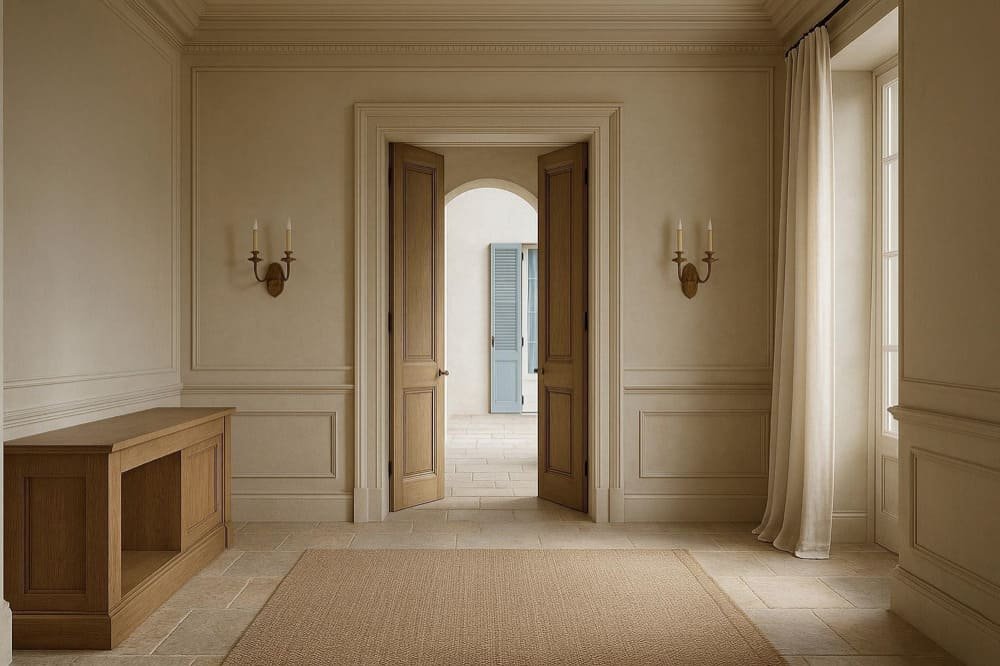
A European villa should feel inevitable—calm, proportionate, and quietly rich in materials—never like a theme-park collage. In my experience, projects go wrong in three predictable ways: over‑layering (too many profiles, patterns, materials), proportion imbalance (doors too low, wainscot too high, cornice too heavy), and material mis‑selection (high‑gloss faux stones, unstable coatings, yellowing plastics). This guide gives you an execution-first system to avoid those traps and deliver authenticity without excess.
The mental model we’ll use throughout is simple and reusable:
- Skeleton (first read): structural composition and proportions—the “bones” you perceive in a single glance.
- Texture (touch & durability): material truth—stone, wood, mineral coatings, metal finishes—chosen for tactility and longevity.
- Ornament (final 10%): restrained, functional jewelry that never leads the design.
We’ll fuse three compatible traditions with discipline:
- Skeleton: French Neoclassical (symmetry, tripartite walls, confident door and window heights)
- Texture: Tuscan/Italian rustic (matte limestone, lime/mineral paints, open‑pore oak)
- Ornament: English Country restraint (understated brass, linen, stitched details)
- Mediterranean cues appear sparingly outdoors (loggias/terraces) only.
Follow the order and the subtraction rules, and you’ll preserve coherence while still achieving depth.
Global Parameters (experience values—verify locally before construction)
These ranges are field‑tested heuristics that align with common code and practice, but always verify with your licensed architect/engineer and local regulations.
- Molding thickness (wall + casing): about net height/12 to 1/18. Rationale: enough visual “shadow” to read depth without top‑heaviness.
- Baseboard: 120–180 mm; adjust to ceiling height and wall articulation.
- Door opening height: 2400–2700 mm. Keep door leaf ≥ 75–80% of net height for legibility.
- Stair geometry: riser 150–170 mm; tread 280–300 mm; handrail 900–950 mm. These fall within contemporary code expectations such as the 2024 International Building Code ranges for risers and handrails (e.g., 4–7 inches riser, 34–38 inches handrail), noted in the ICC’s IBC 2024 Chapter 10. See the International Code Council’s CHAPTER 10 Means of Egress (2024) for context in the ICC Digital Codes library: IBC 2024 Chapter 10 — Means of Egress. Always verify jurisdictional adoption and the International Residential Code if applicable.
- Lighting color temperature: 2700–3000K for living/sleeping areas on multi‑circuit dimming; 3000–3500K can suit task‑heavy kitchens depending on user preference. This is consistent with residential practice guidance; for context, the U.S. General Services Administration’s LED guidance (2023) notes frequent occupant preference around 3000–3500K in many applications: GSA 2023 LED & Controls Guidance. For a formal residential standard, see the Illuminating Engineering Society’s 2020 recommended practice (paid resource landing): IES RP‑11‑20 Residential Environments.
- Stone border: 150–250 mm around field stone to tighten edges and express hierarchy.
- Waterjet medallion: diameter ≤ 1/5 of the room’s short side—keeps focal features disciplined.
Note: Dimensions above are design heuristics, not prescriptions. Scale up or down to the room’s sightlines, door/window rhythm, and ceiling height. Document all deviations and test full‑size mockups whenever feasible.
The Fusion Method: Skeleton → Texture → Ornament
You’ll avoid almost every common pitfall if you lock decisions in this order.
1. Fix the skeleton (proportions and unified profiles) first
- Establish symmetry axes and tripartite wall composition (base/wall/cornice ≈ 1:6:1 as a starting frame).
- Unify moldings: door casings, baseboards, and cornices should share a coherent section logic. One or two profile families for the whole floor is usually enough.
- Confirm door/window heights, widths, and alignments. Where possible, keep heads aligned and profiles continuous across doors and full‑height windows.
2. Specify textures (materials & surface treatments) next
- Prioritize natural/mineral materials and matte finishes for authenticity and touch.
- Stone: light beige limestones and travertines with antiqued edges and a breathable, water‑based sealer. When requesting data sheets, ask for water absorption and compressive/flexural strength values under recognized standards—e.g., absorption by ASTM C97 and compressive strength by ASTM C170. Intertek hosts accessible overviews for these tests: ASTM C97 Absorption (Intertek overview) and ASTM C170 Compressive Strength (Intertek overview). For EN context, typical European testing includes EN 13755 (immersion water absorption) and EN 12372 (flexural). Public examples of EN documentation include the SIST‑EN 12372 sample PDF: EN 12372 Flexural Strength sample (2022).
- Mineral/lime paints: choose vapor‑open, low‑VOC coatings for walls and ceilings where substrate permits. Manufacturer technical data for mineral systems often lists very high permeability (ASTM E96 perms) and low VOC. For instance, a BEECK Calcidan TDS shows sd < 0.03 m (very diffusion‑open) with VOC around 2 g/L: BEECK Calcidan Technical Data Sheet. Always confirm substrate compatibility and primers.
- Metals: unlacquered brass/bronze and blackened iron are period‑appropriate; prefer brushed, waxed, or naturally patinating surfaces rather than high‑gloss electroplating. Plan maintenance and client expectations upfront.
- Wood: open‑pore lacquer or hardwax oil on oak for natural grain; avoid plasticized, high‑gloss topcoats.
3. Add ornaments last—and keep them to 10%
- Use a small number of well‑made elements: a pair of brass sconces, a linen drape with weighted hem, a stitched leather tray. That’s it. The architecture should carry the room.
Subtraction Checklist (apply to every space)
- Main materials ≤ 3; secondary ≤ 2; metal finishes ≤ 2. If you exceed these, consolidate before proceeding.
- Unify all visible sections and corner treatments. If two profiles collide, choose the calmer one.
Materials Priority and Patina Management
If you want “age with dignity,” choose materials that can be maintained, repaired, and that accept patina gracefully.
Natural stone (limestone/travertine)
- Request absorption (%) and strength (MPa) from suppliers via recognized tests. Europe commonly cites EN 13755 (immersion absorption) and EN 12372 (flexural), while North America often uses ASTM C97 (absorption) and ASTM C170 (compressive). The Natural Stone Institute’s Dimension Stone Design Manual provides an overview of standard test methods and selection principles (2022 edition): NSI Dimension Stone Design Manual overview PDF.
- Finishes: antiqued/tumbled edges and matte sealers reduce visible wear. Pre‑layout slabs to manage color variation—travertine and limestones vary by quarry and cut.
Mineral/lime paints
- Benefits: very low VOC and high vapor permeability create drier wall assemblies and authentic matte depth. Examples from reputable manufacturers and healthy material databases emphasize diffusion‑open, low‑emission properties; see the Healthy Materials Lab’s guidance (2024): Healthier Paints overview — Healthy Materials Lab.
- Constraints: require mineral substrates or specific primers; strongly alkaline—follow data sheets; avoid over‑burnishing on touchpoints.
Metals (brass/bronze/iron)
- Unlacquered brass will oxidize naturally. Align expectations with a “natural oxidation tolerance” clause and define a care cadence. Conservation authorities recommend gentle cleaning and protective waxes on copper alloys; the Canadian Conservation Institute’s notes (2022) outline brass care basics and waxing: Canadian Conservation Institute — Care of Brass and Copper. For owner‑friendly guidance, see a manufacturer’s care article on unlacquered brass taps (2023), which recommends mild soaps and periodic waxing: Studio Ore — Care for Unlacquered Brass.
- Coated metals: if a vendor claims high corrosion resistance, request accelerated test data (e.g., ASTM B117 salt‑spray hours) in the finish system’s report; state that salt‑spray is comparative, not a direct life predictor.
Wood (oak, walnut)
- Prefer open‑pore lacquer/hardwax oil for repairability and texture. In heavy‑use zones, specify maintenance oil and a gentle cleaning regimen.
Patina Management Protocol (owner‑approved)
- Brass/bronze: dry dust weekly; wipe with neutral soap as needed; microcrystalline wax every 3–6 months in coastal or humid environments.
- Stone: re‑seal high‑traffic zones annually if using water‑based sealers; avoid acidic cleaners on calcitic stone.
- Wood: refresh oil in traffic lanes seasonally/yearly; use felt pads and breathable area rugs.
Room‑by‑Room Decision Frameworks
Apply the same four‑step sequence for each space: 1) Identify the main visual plane; 2) Set proportions; 3) Set the materials hierarchy; 4) Define patina/aging management.
1) Entry
- Proportion: wainscot at 1/3–2/5 of net height; cornice projection ≈ 0.6–0.8 of its depth. Keep a clear symmetry axis.
- Materials hierarchy: light beige limestone or travertine in an antiqued finish with a perimeter border; walls in mineral/lime paint; solid‑wood door casings with unified profile.
- Patina: specify unlacquered brass lever/knob with “natural oxidation tolerance”; pre‑apply matte stone sealer; do a dirt‑trap mat flush with floor.
- Mistakes & fixes: over‑busy floor medallions—keep medallion ≤ 1/5 of short side or go border‑only; mixed metal finishes—consolidate to one warm tone.
2) Salon/Living
- Proportion: tripartite wall (base/wall/cornice about 1:6:1); align door and window head heights; match casing profiles across glazed doors and fixed panels.
- Materials hierarchy: choose either stone or wood for the primary floor surface (not both). Gypsum relief sparingly; fireplace surround in honed limestone or painted timber to match casings. Metals limited to two finishes (e.g., brushed brass + blackened iron).
- Patina: semi‑open lacquer or oil‑wax on wood floors; brushed + waxed metal on lamps, coffee tables, and wall lights.
- Mistakes & fixes: “theme‑park” paneling—reduce panel count and increase panel scale; glossy chromed accents—swap to brushed warm metal.
3) Dining
- Proportion: ceiling center panel diameter ≈ 1.2–1.4 × table diameter; wall sconce centerline 1450–1550 mm above finished floor.
- Materials hierarchy: simplified waterjet motif or book‑matched stone slabs; walls: wainscot + mineral paint; chairs in natural fabrics.
- Patina: aged black iron or bronze on table base (avoid mirror‑polished plating); wax touch‑up as needed.
- Mistakes & fixes: chandelier too small—scale to 60–70% of table diameter; too many wall panels—consolidate to larger, calmer fields.
4) Kitchen
- Proportion: visual weight ratio tall units:base:wall units ≈ 5:3:2. Keep crown or head heights aligned to doors.
- Details: 20 mm drip edge with soft chamfer at stone tops reduces chipping.
- Materials hierarchy: matte quartz, granite, or dense limestone counters; veneered solid‑wood fronts with open‑pore lacquer; brushed brass or bronze pulls.
- Patina: specify repairable finishes (oiled wood, natural stone). Plan an annual maintenance day for re‑oiling fronts and checking sealers.
- Mistakes & fixes: mixing three or more counter materials—reduce to one primary, one secondary (e.g., island as secondary); high‑gloss laminates—switch to matte or wood veneer.
5) Primary Suite
- Proportion: headboard wall with 1/3–2/5 wainscot; above in mineral paint. Align door and wardrobe profiles and cornice lines.
- Materials hierarchy: timber flooring; selective fabric wall panel or upholstered headboard; linen drapery. Hardware in low sheen (brushed or waxed brass/bronze).
- Patina: light wire‑brushed wood; allow brass luminaires to oxidize; wax quarterly.
- Mistakes & fixes: overly heavy crown—reduce projection; too many textiles—limit to two fabric families (linen + wool/velvet).
6) Guest Suites
- Proportion: simplify molding to ≤ 2 tiers. Keep bathrooms visually unified with one stone or tumbled tile family.
- Materials hierarchy: favor durability—antiqued or lightly washed stones/tiles; metals unified in brushed nickel or aged bronze per suite.
- Patina: aim for a “clean, light timeworn feel,” not exaggerated distress.
- Mistakes & fixes: mixing three metal tones across bath fixtures—lock one finish pack; fussy borders—use a single, calm edge detail.
7) Terraces/Loggias (Mediterranean only here)
- Proportion: arch height:width ≈ 1:1 to 1:1.2 (semicircle or soft ellipse); baluster rhythm 900–1100 mm.
- Materials hierarchy: white stucco or lime finish; pale stone treads; wood or metal shutters in blue‑grey.
- Patina: outdoor metals with hot‑dip galvanized base and an aged finish system; stone with antiqued chamfers to hide chips.
- Mistakes & fixes: importing Mediterranean motifs indoors—keep them strictly to exterior spaces; thin, shiny railings—choose heavier sections with matte finishes.
Budget by Composition Ratios (hard finishes only)
Use ratios to manage expectations across regions and market cycles. Exclude MEP, appliances, and soft furnishings.
Core Luxury
- Stone + millwork: 50–60%
- Metal hardware + surface finishing: 10–15%
- Paints + special finishes: 10–15%
- Remaining (tile, glass, misc. carpentry): 15–25%
Master (adds whole‑house custom millwork, complex staircase, waterjet medallion)
- Stone + millwork can rise to 65–70%
- Engineering/templating complexity increases unit rates and coordination time.
Heritage (rare stones, hand‑troweled lime plaster, hand‑forged metal)
- Labor share rises; total labor:materials ≈ 6:4 or higher. Expect more mockups, slower production, and tighter QA.
Guidance
- Track ratios by room and by floor to catch over‑investment early (e.g., living/dining swallowing budget intended for primary suite).
- Where medallions or stair complexity appear, earmark added coordination time in the Master/Heritage tiers.
Ready‑to‑Use Tools (copy‑paste templates)
A) Design Brief Template (send to design/detailing/factory)
- Style anchors: French Neoclassical skeleton + Italian rustic textures + English Country detailing; exterior loggia with Mediterranean white stucco only.
- Proportions: door openings H = 2400–2700; wainscot = 1/3–2/5 net height; unified molding profiles (attach sections); example stair 160/290 (riser/tread)—verify against local code.
- Materials priority: 1) natural stone/mineral paints/open‑pore wood; 2) brass/bronze/black iron (≤ 2 finishes); 3) minimal ornaments.
- Patina management: unlacquered metals allowed to oxidize naturally; matte + chamfered stone with water‑based sealer; wood in oil‑wax/open lacquer.
- Deliverables: sample trio (300×300 stone, wood color board, metal finish chips), installation details, hardware schedule.
B) Three‑Line Client Script to Avoid “Pastiche”
- “We perfect the skeleton proportions first; ornaments are the last 10%.”
- “Per space: main ≤ 3 materials, secondary ≤ 2, metal finishes ≤ 2 — the fewer, the finer.”
- “All molding profiles and corners are unified. That’s the difference between ‘European’ and ‘theme park.’”
C) RFQ Scripts for Samples and Data
Stone RFQ
- “Please provide 300×300×20 mm samples of light beige limestone/travertine in an antiqued finish with a 2 mm chamfer. Include photos before/after a water‑based sealer. State origin and include test results: water absorption (%) per ASTM C97 or EN 13755; compressive/flexural strength per ASTM C170 and/or EN 12372. Provide batch color control procedures and lead times.” For reference on test methods, see overviews for ASTM C97 Absorption and EN 13755 immersion absorption (academic/standards context, 2023).
Wood RFQ
- “Oak veneer fronts in two finishes: 20% sheen open‑pore lacquer and hardwax oil. Light wire‑brush. Include edge‑banding detail, corner/joint photos, and substrate species/grade.”
Metal RFQ
- “Brass/bronze in unlacquered and wax‑sealed versions. Provide any available finish durability data; if coated systems are proposed, include accelerated corrosion testing references (e.g., ASTM B117 hours) with test lab details. Share care instructions and expected patina timeline.”
D) Site Verification Checklist (excerpt)
- Door/window rough openings: dimensions, plumb, and square verified; align head heights across a room.
- Molding corners: 45° miters or consistent radii; profile transitions documented.
- Stone: confirm quarry/batch; pre‑layout approved; color variance within agreed band; edges chamfered uniformly.
- Metals: finish tone uniform; exposed screws color‑matched; protection during construction.
- Lighting: verify CCT grouping (all 2700K/3000K as specified) and dimming circuits.
Compliance, Risk, and Scope Notes
- Out‑of‑scope: structural/seismic, MEP systems, smart home integration, insulation/energy modeling—engage licensed local teams.
- Codes and standards: all dimensional values here are experience‑based and must be verified against applicable codes. For stairs/handrails, consult your jurisdiction’s adopted codes and the ICC’s 2024 International Building Code Chapter 10 for context: IBC 2024 Chapter 10 — Means of Egress. For residential projects, align with the applicable International Residential Code.
- Coatings and finishes: confirm VOC and permeability with manufacturer technical data for mineral paints. One example data sheet indicating diffusion‑open and low‑VOC properties is the BEECK Calcidan Technical Data Sheet; use actual TDS from the brand you procure.
- Stone QA: request EN/ASTM test reports (e.g., absorption and strength). The Natural Stone Institute’s manual (2022) provides method overviews: NSI Dimension Stone Design Manual overview PDF.
- Unlacquered brass maintenance: align client expectations with a “natural oxidation tolerance” clause and a care plan informed by conservation guidance such as the Canadian Conservation Institute’s brass care notes.
- Import & regulatory (verify per destination country):
- HS codes: require suppliers to declare classification for stone and metal items; refer to tariff schedules (e.g., U.S. HTS Chapter 68 for worked stone): USITC Harmonized Tariff Schedule — Chapter 68.
- Radiation in building materials: some regions reference annual dose benchmarks; the Finnish Radiation and Nuclear Safety Authority summarizes EU guidance and the 2013/59/Euratom directive context: STUK — Radioactivity of building materials.
- Lead restrictions: ensure coatings/finishes comply with your market’s rules. The European Chemicals Agency maintains the list of substances restricted under REACH (including lead uses): ECHA — Annex XVII restrictions. In the U.S., align work practices with the EPA’s Renovation, Repair and Painting (RRP) program for lead safety: EPA — Lead RRP Program.
Risk reminders
- Natural stone varies—color and fissures are inherent. Insist on pre‑layout and signed sample approvals.
- Unlacquered metals will patinate—obtain the client’s written acceptance of natural oxidation and maintenance duties.
- Cost, MOQs, lead times, and standards vary by country, exchange rate, and grade—treat ranges here as planning guides, not quotations.
Quick Troubleshooting: How to Correct the Three Big Mistakes
1. Over‑layering
- Symptom: too many moldings, patterns, materials; visual noise.
- Remedy: enforce the Subtraction Checklist; consolidate to one profile family; delete duplicate metal finishes; simplify floor from medallion to border.
2. Proportion imbalance
- Symptom: doorways read short; wainscot bites too high; cornice feels heavy.
- Remedy: raise door head to align with window heads; adjust wainscot to 1/3–2/5; reduce cornice projection, test with full‑size mockup.
3. Material mis‑selection
- Symptom: glossy faux stone, unstable coatings, yellowing plastics.
- Remedy: switch to natural/mineral palette; specify matte sealers and open‑pore wood; request EN/ASTM data for stone; choose unlacquered brass/bronze or proven brushed finishes.
Your Operational Workflow (recap)
- Identify the main visual plane in each room.
- Set the skeleton: proportions, alignments, and unified profiles.
- Define the materials hierarchy: stone/wood/metal/paint in matte, tactile finishes.
- Plan patina: owner‑approved care protocols for brass, stone, and wood.
- Only then add a few ornaments.
Execute this loop room by room and your villa will read as authentically European—quietly confident, technically sound, and built to age well.
Next Steps
- Book a 30–45 minute materials strategy session to align proportions, materials, and maintenance before procurement.
- Download the room‑by‑room proportion and materials checklist to brief your team and vendors.
- Request the three‑piece sample kit (stone 300×300, wood color board, metal finish chips) to lock your palette early.