How to Transport Home Decoration Products from China via LCL
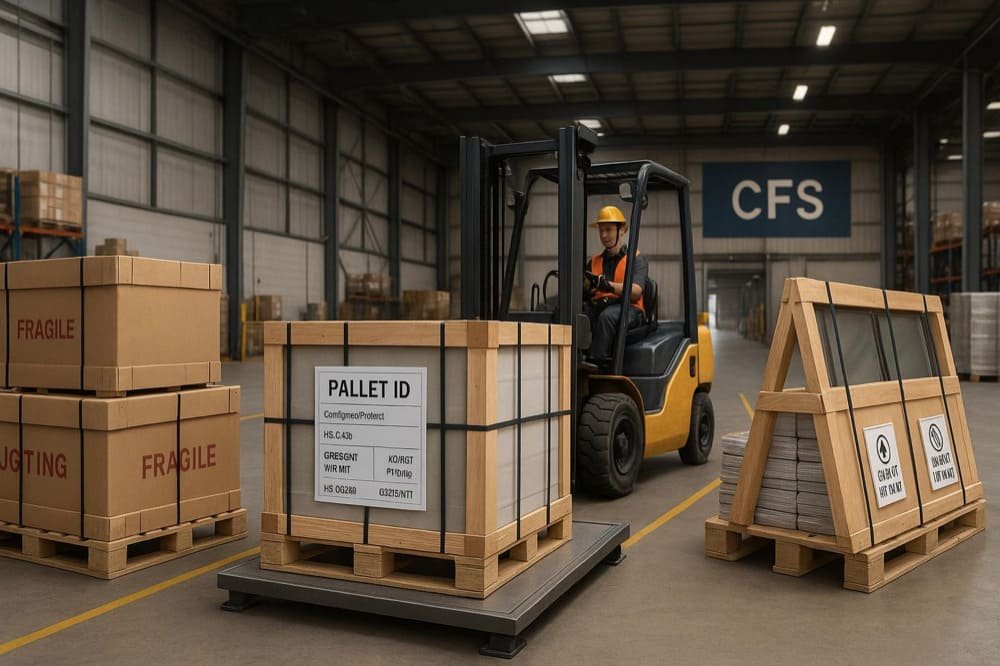
You’re coordinating tiles, wood flooring, lighting, sanitary ware, furniture, mirrors, and hardware from multiple Chinese suppliers—yet your site needs everything to land together, damage‑free, and within budget.
This hands-on guide shows you exactly how to plan, consolidate, pack, document, insure, and ship an LCL load from China without nasty surprises. Expect clear checklists, verification steps, and remedies when things go off-script.
Who this is for: renovation and fit‑out project managers, procurement leads, and operations teams moving mixed‑SKU shipments from several suppliers in China.
What you’ll achieve: an end‑to‑end, repeatable LCL workflow you can execute with your suppliers and forwarder, including China‑side consolidation, export packaging by product category, Incoterms 2020 choices, cargo insurance setup, and risk control from CFS gate‑in to site delivery.
Difficulty: Moderate. Time: 2–4 weeks for consolidation prep (varies by supplier readiness) plus ocean transit.
Step 1 — Plan your China‑side consolidation
Do this before anyone ships a carton.
- Build a master PO matrix (by supplier): SKU, HS code, units, outer carton count, each carton L×W×H and gross/net weight, palletization plan, fragile/heavy flag, and planned gate‑in date. Keep it in a shared tracker.
- Issue an Advance Shipment Notice (ASN) template to suppliers. Require: PO, SKU list, carton count, carton dimensions/weights, pallet plan, photos of final packed units, handling notes (Fragile/This Side Up/Keep Dry), and a requested CFS delivery slot.
- Book your forwarder and a CFS receiving window. Confirm CFS address, receiving hours, gate‑in requirements, and cut‑off (often 2–3 days before ETD). Ask for pallet preferences: many CFS teams handle safest at about 1.2–1.4 m height and ≤1,000 kg per pallet. Some carriers accept much larger pallets, but extra handling and fees can result—validate limits with your forwarder; see the context in the Maersk LCL FAQ on maxima (Maersk, accessed 2025).
Verification
- At planning sign‑off, you should have a populated PO matrix, ASN template sent to all suppliers, a confirmed CFS address and cut‑off, and written pallet/height preferences.
Step 2 — Direct suppliers on packing, labeling, and delivery
Give one consistent instruction sheet to all suppliers.
- Label every pallet on the top and four sides: Pallet ID (unique), Consignee/Project, PO(s), SKU range, carton count, gross/net weight, L×W×H, handling icons, and booking reference.
- Label every carton: SKU, PO, sequence number (e.g., 1/44), gross/net weight, dimensions, country of origin, and icons (Fragile/This Side Up/Keep Dry) where relevant.
- Separate fragile vs heavy cargo. Build different pallets for lighting, mirrors, and sanitary ware vs tiles/stone and hardware. Never place heavy cartons above fragile cartons.
- Choose wood packaging that won’t get blocked on import. Prefer plywood/OSB/engineered wood crates to avoid ISPM 15 treatment requirements for solid wood; if you use solid wood pallets/crates, they must be compliant with USDA APHIS guidance on ISPM 15 wood packaging material (reference authority, current 2025).
- Book delivery appointments to the CFS. Suppliers should submit ASN + proposed gate‑in slot; your forwarder confirms receiving times.
Verification
- Request photo proof before dispatch: full pallet (all faces), close‑up of labels, and one unboxed sample for fragile SKUs. Check that any solid‑wood pallets show the IPPC mark (two sides, legible HT/MB code).
Troubleshooting
- If a supplier cannot meet pallet specs (over‑height/over‑weight), instruct split packing into two stable pallets and re‑label with new Pallet IDs before gate‑in to avoid on‑site rework charges.
Step 3 — Manage CFS receiving and consolidation
At the CFS (or your appointed consolidator), insist on a disciplined intake.
- Receiving: verify labels; count cartons/pallets; measure and weigh each pallet; photograph all pallet faces and label close‑ups; note any visible damage.
- Compatibility and stowage: separate fragile from heavy pallets; keep heavy pallets low/forward; never put compression loads above fragile goods. For LCL handling do not allow pallet overhang.
- Palletization norms: aim for stable, double‑stackable heights (~1.2–1.4 m). Carriers can accept higher loads, but rework risk grows—confirm per lane and CFS.
- VGM (Verified Gross Mass): for LCL, the consolidator submits the verified mass under SOLAS. Ensure your forwarder follows local authority guidance such as the Hong Kong Marine Department’s VGM FAQ (regulatory explainer, 2025). Keep the VGM acknowledgment on file.
Verification
- Obtain weigh/measure sheets, the full set of pallet and label photos, and a consolidation plan showing how fragile/heavy pallets will be positioned.
Troubleshooting
- If pallets arrive unstable (crushed corners, overhang), rework at CFS: add edge boards, reduce height, increase strap count, and re‑wrap. Re‑photo and update the master packing list (MPL).
Step 4 — Assemble documentation and compliance
Prepare clean, consistent data. In LCL, small clerical errors cause big delays.
- Commercial invoice: accurate consignee, Incoterm, and product descriptions.
- Detailed packing list: Pallet IDs, SKU lines with HS codes, carton counts, dimensions, and weights per line.
- Bills of lading: your forwarder issues an HBL; the carrier issues an MBL for the consolidated container. Ensure HBL and MBL data align.
- Certificates: Certificates of Origin if required for duty preference; ISPM 15 or fumigation certificate if you used solid‑wood WPM.
- Safety documents: SDS for any batteries or DG components (some lighting includes lithium batteries). Coordinate with your forwarder.
- Destination filings: For the U.S., ensure ISF (“10+2”) is filed at least 24 hours before vessel loading; late or inaccurate ISF may incur penalties up to $5,000 per violation, per CBP’s ISF penalties guidance (U.S. Customs and Border Protection, 2025). Carriers/forwarders handle AMS, EU ENS, or CA ACI submissions.
Verification
- Cross‑check HS codes per SKU against product specs. Ensure invoice/packing list values and quantities match exactly. Keep draft HBL and MPL aligned and reviewed before cargo cutoff.
Troubleshooting
- If customs queries HS classification: quickly provide material composition, photos, and use; consult your broker for a binding ruling if this SKU recurs.
Step 5 — Apply category‑specific export packaging standards
Mixed home‑decor LCL breaks when you treat all SKUs the same. Tailor by category and document everything with photos. For general LCL handling and protection fundamentals, see Silq’s best practices for packaging and handling in LCL shipments (Silq, 2024).
A) Tiles and Stone
- Use strong cartons with edge protectors; interleave with foam/corrugated sheets.
- Palletize compactly with anti‑slip sheets; band with PET/steel; stretch‑wrap tight; no overhang.
- Keep heavy pallets at the base of the LCL stack; mark “Heavy – Do Not Stack.”
- Verification: corner protection photos; banding close‑ups; pallet stability push‑test recorded in photos/video.
- Quick fix: if overhang or crushed corners appear at CFS, add honeycomb corner boards and top caps; split oversized stacks.
B) Wood Flooring
- Seal bundles in PE film; add desiccants or VCI; maintain wood moisture content below ~12% before packing (record meter reading photo).
- Use plywood/engineered crates or ISPM 15‑compliant solid‑wood pallets if you must use solid wood; visually confirm IPPC marks per USDA APHIS ISPM 15 WPM rules (2025).
- Verification: moisture meter photos; desiccant count per pallet; IPPC mark photos on two sides if solid wood is present.
C) Lighting Fixtures (and Drivers/Batteries)
- Inner EPS/EPE foam; immobilize components; use double‑wall 5‑layer cartons; label FRAGILE/THIS SIDE UP.
- Where feasible, validate packaging with drop tests aligned to parcel-handling protocols (e.g., ISTA 2A/3A); see this concise explainer on ISTA 3A and 2A methods (Safe Load Testing, 2024).
- Verification: open and inspect a sample carton at CFS; capture carton burst strength if provided.
- Quick fix: if crushed boxes appear, upgrade carton board grade and foam density; separate heavy drivers from delicate shades.
D) Sanitary Ware (Ceramics)
- Use custom foam inserts; double‑box with corner guards; apply tilt/shock indicators where appropriate.
- Verification: record tilt/shock indicator status pre‑dispatch and on arrival; shake‑test at supplier.
- Quick fix: re‑pack with higher‑density foam and reinforced double‑wall cartons if breakages appear at CFS.
E) Furniture
- Flat‑pack whenever possible. For assembled pieces: foam, edge protectors, corrugated wrap, then plywood crate with internal blocking/bracing; strap firmly.
- Keep away from dense stone pallets; avoid top loading.
- Verification: crate interior photos showing bracing; confirm processed wood (plywood/OSB) or IPPC‑marked solid wood.
F) Mirrors and Glass
- Use vertical A‑frames with padded contact points and anti‑shatter film; label DO NOT LAY FLAT.
- Do not stack above or place heavy items adjacent.
- Verification: photo the A‑frame, padding, and tie‑downs; confirm zero movement in transit simulation.
Step 6 — Book transport, choose the mode, and control costs
- Understand LCL rating: charges are typically per CBM with a minimum (often 1 CBM; some lanes higher). Very dense cargo may be weight‑rated (kg vs CBM). Plan your mix.
- Reduce rework: stable pallet heights (~1.2–1.4 m) often move faster through CFS and reduce handling damage.
- Synchronize supplier gate‑ins: avoid storage and missed cutoffs. Share a weekly consolidation calendar with each supplier.
- Watch destination deconsolidation: factor local CFS handling fees and free time (commonly 3–5 days). Pre‑book last‑mile to minimize storage.
Verification
- Before cutoff, confirm your space booking, CFS receipts, weigh/measure totals, VGM submission, and draft HBL accuracy.
Troubleshooting
- If you miss the CFS cutoff, ask your forwarder for the next sailing and confirm rollover/storage fees. Update your site team’s ETA.
Step 7 — Choose Incoterms 2020 that fit LCL realities
Pick terms that match where risk should transfer and who controls consolidation.
- FOB (sea only): risk transfers when goods are on board at the port of shipment; not ideal when suppliers are inland and you need pickup/control early.
- FCA (any mode): risk transfers upon delivery to the first carrier at the named place; well‑suited when you or your forwarder collect from inland factories feeding a consolidation.
- CIF (sea only): seller arranges freight and minimum insurance (traditionally ICC C) to destination, but risk still transfers on board at the port of shipment.
- CIP (any mode): seller arranges freight and higher insurance (ICC A) to the named destination; risk transfers at first carrier.
For the official rule set and definitions, see the ICC’s Incoterms 2020 rules overview (International Chamber of Commerce, 2020). For an applied perspective on pickup‑point differences, compare FCA vs FOB in Incoterms 2020 (ICC Academy, 2020).
Practical picks for mixed‑supplier LCL
- Prefer FCA for inland factories so you control carrier selection and consolidation.
- Use CIP if you want the seller to arrange carriage and higher insurance obligations—but check premium impacts and policy terms.
Step 8 — Insure the cargo and prepare for claims the right way
Mixed, fragile LCL cargo passes through many hands—don’t ship uninsured.
- Coverage scope: Under the Institute Cargo Clauses, ICC(A) is “all risks” (with standard exclusions), ICC(B) and ICC(C) are named‑perils sets with narrower coverage. See this concise outline of ICC A/B/C differences in the MSC marine cargo insurance explainer (MSC, 2023). Clause wordings are owned by the London Market bodies (LMA/IUA).
- What’s not covered by default: delay, inherent vice, and insufficient packing are common exclusions—pack well and document it.
- Claims protocol: when damage is discovered, notify the insurer immediately, appoint an independent surveyor, preserve packaging, photograph everything, and keep HBL/MBL, invoices, MPL, and delivery receipts. Many policies require action within strict time bars (often up to 12 months for legal action—confirm your policy).
Verification
- Before sailing, hold an insurance certificate showing sum insured, voyage, and ICC(A/B/C) clause. Store your packaging photo log and CFS intake photos for evidence.
Step 9 — Run these verification checkpoints
Before CFS gate‑in
- Supplier ASN received with photos, labels visible, and, if solid wood is used, IPPC marks present.
- Carton counts, dimensions, and weights match the PO matrix.
At CFS receiving
- Weigh/measure sheets captured.
- Pallet and label photos (all faces) stored.
- Fragile vs heavy segregation confirmed.
Before vessel cutoff
- VGM acknowledgment on file (from forwarder/carrier portal per SOLAS guidance such as the Hong Kong Marine Department’s FAQ cited earlier).
- Draft HBL and MPL cross‑checked line‑by‑line.
On arrival at destination
- Inspect fragile pallets first; check tilt/shock indicators.
- If damage exists, stop further handling, notify insurer, and request a surveyor. Photograph packaging and internals before repacking.
Practical workflow example (neutral, replicable)
A boutique hotel renovation consolidates 12 suppliers totaling ~8 CBM in Shanghai. Each supplier submits an ASN with pallet photos and labels. At the CFS, receiving counts, measures, weighs, and photographs every pallet.
Tiles and hardware pallets are kept separate from lighting and mirrors. Wood flooring is sealed with desiccants; pallets use plywood to avoid ISPM 15 formalities. The consolidator compiles the MPL with HS codes by SKU, submits VGM, and books the LCL sailing.
At destination, the consignee receives the arrival notice, collects within free time, and inspects fragile pallets first; a chipped washbasin triggers immediate photos and a survey request under ICC(A).
In projects like this, a specialist consolidator such as ChinaBestBuy can coordinate multi‑supplier receiving, packaging upgrades, ISPM 15 verification, documentation, and LCL booking end‑to‑end.
Troubleshooting quick fixes
- Missed CFS cutoff: request next sailing; confirm rollover/storage fees; update site installation timelines.
- Over‑height pallet refused: split the pallet; add edge boards and straps; re‑label with new Pallet IDs; re‑photo for the MPL.
- Non‑compliant wood packaging (no IPPC marks on solid wood): replace with plywood/OSB or obtain treatment/marking from a certified facility before export according to ISPM 15 requirements summarized by USDA APHIS (2025).
- Moisture damage risk for wood flooring: increase desiccant units, re‑seal PE wrap, delay shipment until moisture readings are back under ~12%.
- HS code query at destination: provide composition, product specs, and photos; work with your broker to correct or seek a binding ruling.
Reference: compliance touchpoints to cite to your team
- VGM and SOLAS responsibility: Hong Kong Marine Department VGM FAQ (2025).
- ISPM 15 for wood packaging: USDA APHIS WPM guidance (2025).
- LCL pallet size context: Maersk LCL FAQ on pallet/container maxima (accessed 2025; confirm per lane/CFS).
- Incoterms definitions: ICC Incoterms 2020 rules and ICC Academy FCA vs FOB (2020).
- Marine cargo insurance differences: MSC guide to ICC A/B/C (2023). For detailed wordings, consult your insurer referencing LMA/IUA clause ownership.
- U.S. ISF timing/penalties: CBP ISF penalties explainer (2025).
Next steps
If you want a consolidated shipping plan tailored to your SKUs and supplier map—covering China‑side receiving, packaging upgrades, documentation, and an LCL sailing schedule—contact ChinaBestBuy for a plan and quote.
We’ll align consolidation timing with your installation milestones and build the verification steps into your tracker so you stay in control from gate‑in to site delivery.