What Should You Inspect Stairs For? 24 Key Checks
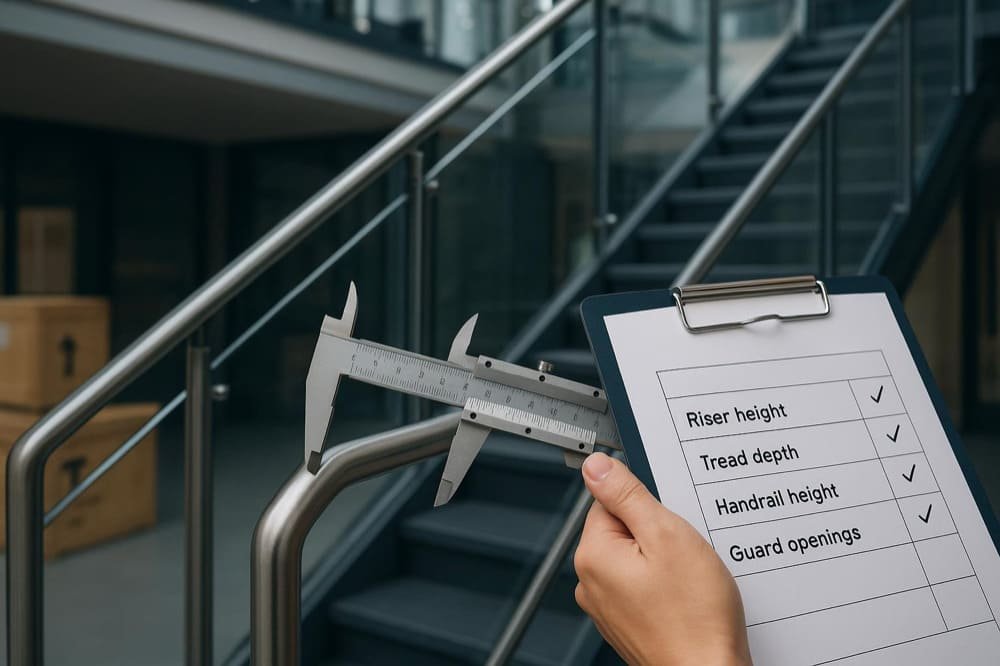
Procurement and project managers carry the responsibility for stair packages arriving on spec, passing inspection, and keeping schedules intact.
Here’s the deal: if you set clear requirements early, verify factory QA, protect finishes in transit, and measure again on site, you avoid costly rework.
This checklist translates IBC and OSHA requirements into practical, pass/fail checks you can include in RFQs, shop drawings, and acceptance protocols.
Always confirm final details with your local Authority Having Jurisdiction (AHJ).
Pre-sourcing & Specification
1) Stair geometry—risers and treads (IBC 1011.5.2)
- What to measure: Riser height and tread depth, plus uniformity within a flight.
- Acceptance: Risers ≤7 in and ≥4 in; treads ≥11 in. The greatest riser or tread within a flight may not vary by more than 3/8 in. See ICC’s language in IBC 2024 §1011.5.2.
- How to verify: Dimensioned shop drawings and onsite tape measurements from nosing-to-nosing.
2) Clear width and egress capacity (IBC Chapter 10)
- What to measure: Stair clear width and whether it meets occupant-load-based egress capacity.
- Acceptance: Typically ≥44 in for occupant load ≥50; otherwise ≥36 in, plus egress capacity per Chapter 10. Coordinate with the life safety plan and confirm with the AHJ.
- How to verify: Measure finished clear width between handrails; validate capacity with the egress designer of record.
3) Landings and headroom (IBC 1011; OSHA 1910.25)
- What to measure: Landing presence, width/depth, and headroom along the stair path.
- Acceptance: Landings at top/bottom; depth typically ≥36 in; width ≥ stair. Headroom ≥80 in measured from nosings per IBC; OSHA also references a minimum vertical clearance for fixed stairs in 29 CFR 1910.25.
- How to verify: Shop drawings dimension landing depth/width; onsite measure vertical clearances.
4) Handrail height, continuity, and returns (IBC 1014)
- What to measure: Handrail height above nosings, continuity along flights, extensions, and returns.
- Acceptance: Height 34–38 in; continuous where required; returns to wall/guard/walking surface; typical extensions: top ≥12 in, bottom ≥ one tread depth. See IBC 2024 §1014.
- How to verify: Dimensioned handrail details; onsite measure with a level and tape; confirm end conditions.
5) Guard height and openings (IBC 1015)
- What to measure: Guard height at open sides and maximum opening sizes.
- Acceptance: Height ≥42 in; openings typically do not allow a 4-in sphere to pass, with special triangle exceptions at stairs. See IBC 2024 §1015.
- How to verify: Measure guard top height; test openings with calibrated gauges; review stair triangle details.
6) Guard/handrail structural loads (IBC 1607.8 / ASCE 7)
- What to measure: Design loads for rails and infill.
- Acceptance: Top rails/handrails resist 50 plf uniform and 200 lb concentrated; infill resists 50 lb concentrated over 1 sq ft. See an authoritative mirror of the IBC/ASCE language at NYC §1607.8.1.
- How to verify: Engineering calculations and, where required, physical load tests or mockups.
7) Slip resistance strategy and nosing visibility (IBC 1003.4; ANSI A326.3 practice)
- What to measure: Documented slip resistance approach and nosing visual contrast.
- Acceptance: IBC requires slip-resistant walking surfaces; ANSI A326.3 wet DCOF ≥0.42 is commonly cited for level interior walkways, but stairs aren’t directly scoped—specify stair-specific products or tests. Use industry resources such as ANSI A326.3 (TCNA overview).
- How to verify: Manufacturer test reports; onsite trials under expected contaminants; visual contrast checks at nosings.
Factory Production & QA
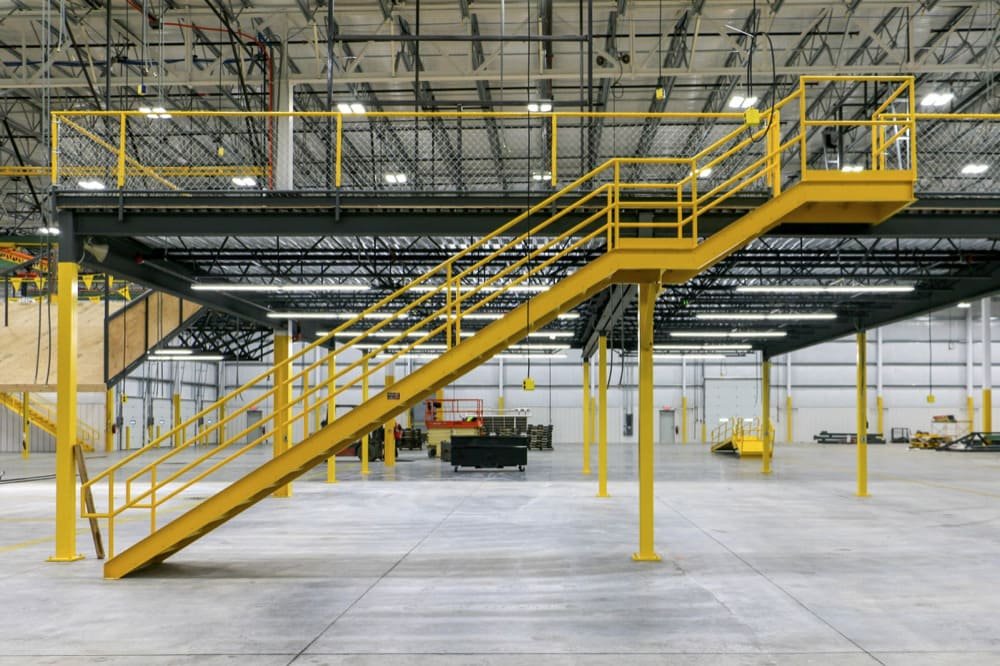
8) Steel fabrication and weld acceptance (AWS D1.1 visual checks)
- What to inspect: Weld quality—no cracks, overlap; undercut within limits; porosity controlled; fillet sizes per drawings.
- Acceptance: Align with AWS D1.1 visual acceptance. Practical summaries exist, e.g., AWS D1.1 visual inspection guide.
- How to verify: Factory QC records; welding gauges; photo documentation; third-party inspection where required.
9) Material grades and certificates (metals, wood)
- What to inspect: Structural steel/aluminum grades; stainless 304/316 selection; wood species/quality.
- Acceptance: Mill certificates for metals; wood specification conformance; aluminum extrusions per ASTM B221 when applicable.
- How to verify: Certificates attached to the lot; random checks of markings; dimensional tolerances.
10) Glass type, impact category, and labels (IBC Ch. 24; CPSC 16 CFR 1201)
- What to inspect: Tempered/laminated glass in guards/rails; impact category; required labels.
- Acceptance: Safety glazing per IBC Chapter 24; guards using glazing must meet impact (Category II/Class A) and lamination rules where walking surfaces exist below. See CPSC 16 CFR 1201 and confirm alignment with IBC §2406/§2407.
- How to verify: Factory labels; certificates; edge finish quality; hole/slot tolerances; lamination interlayer specs.
11) Handrail graspability and profile tolerance
- What to inspect: Profile diameter/shape and clearance to walls.
- Acceptance: Graspable profile per project details; height 34–38 in (see IBC §1014 for height). Consider ADA §505 guidance for diameter and clearance when scoped.
- How to verify: Caliper measurements; mockup grasp tests; review bracket standoff dimensions.
12) Anchorage and hardware specification (grades, corrosion)
- What to inspect: Anchor type, grade, edge distances, and corrosion protection.
- Acceptance: ICC-ES compliant anchors where specified; stainless 304/316 or coated hardware matched to environment; torque/tension values defined.
- How to verify: ESR reports on file; torque wrench verification; embed plate location checks.
13) Coatings and finishes (powder/anodizing/SS passivation)
- What to inspect: Powder coating thickness/adhesion; anodizing quality; stainless passivation.
- Acceptance: Typical powder thickness 60–100 μm unless specified; adhesion per ASTM D3359; salt-spray benchmarks per ASTM B117 where required.
- How to verify: Coating QC reports; dry film thickness gauges; adhesion test records; finish samples.
Pre-shipment & Packaging
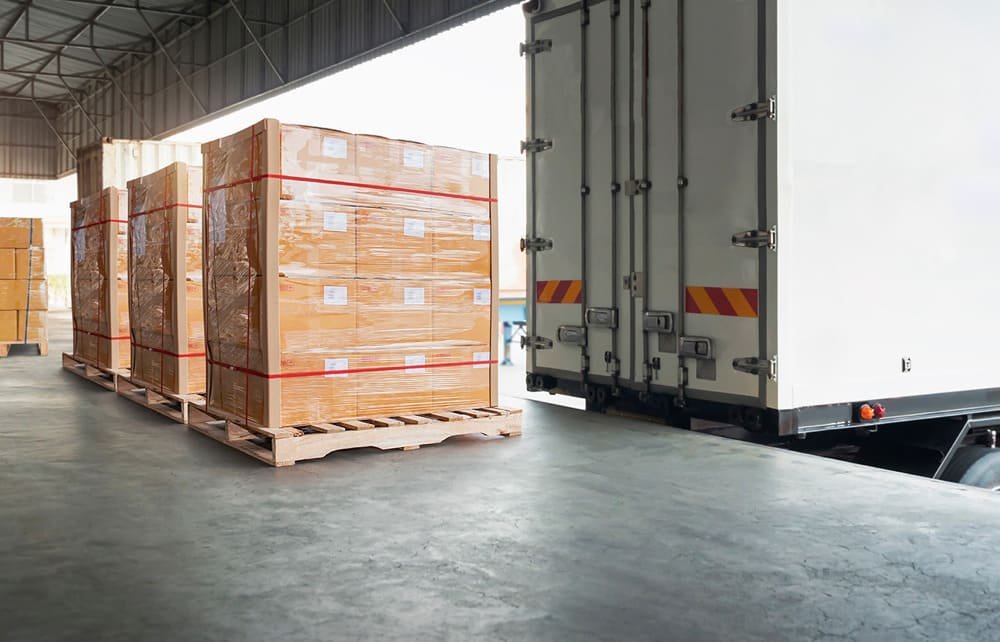
14) Tread and nosing protection
- What to inspect: Edge guards, corner protection, and abrasion prevention.
- Acceptance: Protective films and guards on all finished edges/nosings; interleaving to avoid rub damage.
- How to verify: Packaging photos; sample crate opening checks; anti-scratch materials confirmed.
15) Glass packaging and edge protection
- What to inspect: Crate design for glass with shock/tilt indicators; edge wrapping; spacers.
- Acceptance: Laminates separated by spacers; foam protection at edges; indicators installed for handling.
- How to verify: Photo evidence; shipping SOP; receiving inspection checklist.
16) Corrosion and moisture control in crates
- What to inspect: Moisture barriers, desiccants, VCI films, and indicators.
- Acceptance: VCI for metals where risk exists; desiccant packs sized to crate volume; humidity indicators accessible.
- How to verify: Packing list notes; moisture indicator placement; crate seal checks.
17) Crate design, handling, and labeling
- What to inspect: Lift points, orientation arrows, center-of-gravity marking, and project IDs.
- Acceptance: Clear labels (project/item), handling marks, and structural crate integrity for forklift/hoist.
- How to verify: Crate drawings; label samples; shipper confirmation; arrival condition logs.
Site Delivery & Installation
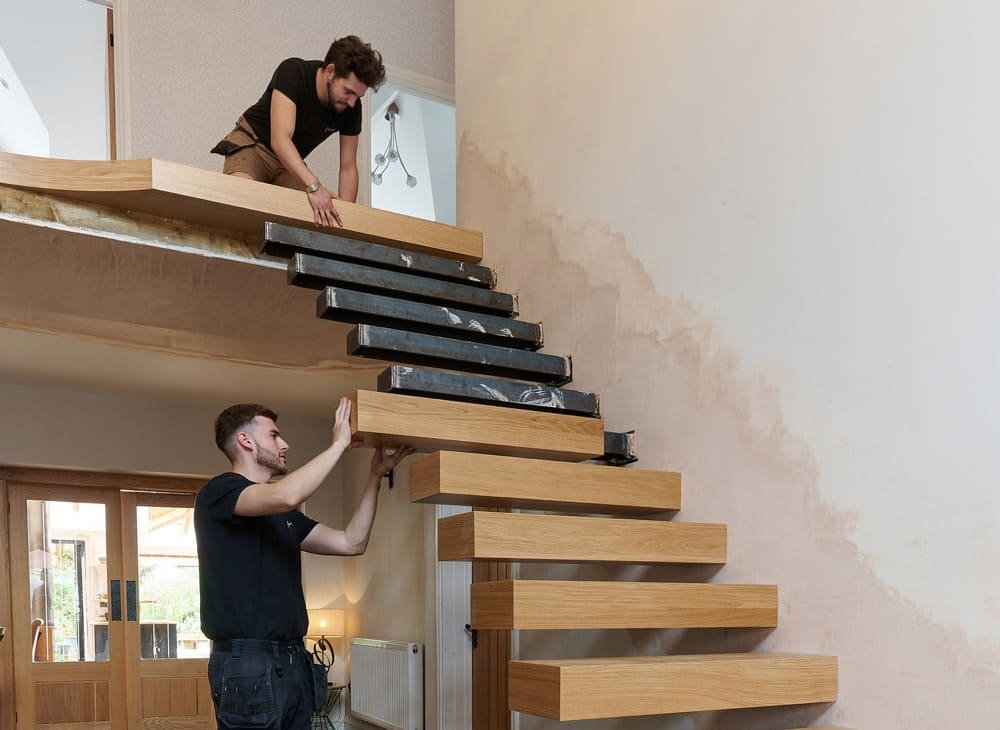
18) On-site geometry recheck (rise/run uniformity)
- What to measure: Riser/tread uniformity after installation.
- Acceptance: Match IBC §1011.5.2 uniformity limits (≤3/8 in variation within a flight; risers 4–7 in; treads ≥11 in). Reference the earlier citation without re-linking.
- How to verify: Measure each riser and tread; check cumulative rise; verify nosing alignment.
19) Handrail install height, continuity, and extensions
- What to measure: Final handrail heights, continuity, end returns, and extensions.
- Acceptance: 34–38 in height; continuous along the path; returns and typical extensions per IBC §1014. Reference the earlier citation without re-linking.
- How to verify: Tape and level checks; physical inspection of joints and returns.
20) Guard height, openings, and stability
- What to measure: Final guard top height, opening sizes, and perceived stiffness.
- Acceptance: Height ≥42 in; openings per 4-in sphere rule; design loads per IBC §1607.8/ASCE 7. See the previously cited load criteria reference without re-linking.
- How to verify: Height/opening measurements; review engineering calcs; conduct on-site deflection checks if required.
21) Slip performance and nosing contrast in context
- What to measure: Real-world slip performance and visibility of nosings.
- Acceptance: Slip-resistant surface per IBC §1003.4; project-specified tests or product data for stair treads/nosings; contrasting nosings recommended for visibility. Reference the ANSI A326.3 resource noted earlier.
- How to verify: Review manufacturer data; perform site trials; check contrast under expected lighting.
22) Anchorage torque/tension verification
- What to measure: Final fastening torque/tension and edge distances.
- Acceptance: Matches project specs and anchor ESR guidance; no edge-distance violations or cracks.
- How to verify: Torque wrench logs; pull tests if specified; visual checks of base plates and fasteners.
Final Acceptance & Documentation

23) Documentation package completeness (drawings, certs, tests)
- What to collect: Shop drawings, IBC/OSHA mapping sheet, certificates (glass, coatings, DCOF, passivation), welding records, mill certs, packaging photos, logistics documents.
- Acceptance: All certificates and reports tied to lot numbers; labels present (glass safety glazing); records consistent with delivered items.
- How to verify: Cross-check documents against packing lists; verify label presence on glazing; ensure WPS/WPQR and welder certs are on file.
24) As-built review and AHJ coordination
- What to finalize: As-built dimensions, deviations log, and inspection sign-offs.
- Acceptance: Any variances approved; punch-list closed; AHJ inspections scheduled/completed per local process.
- How to verify: As-built drawing set; meeting minutes with AHJ; final acceptance forms.
Practical workflow example (supplier briefing)
Disclosure: ChinaBestBuy is our product.
Here’s a concise way to brief a Chinese factory on handrails and guards for a North America-bound project:
Specify handrail height 34–38 in per IBC §1014, guard height ≥42 in and openings per IBC §1015, and design loads per IBC §1607.8/ASCE 7 (50 plf uniform; 200 lb concentrated).
Request ANSI A326.3 wet slip test data for selected tread/nosing materials (with stair applicability caveat) and safety glazing certificates to CPSC 16 CFR 1201 Category II for any glass guards.
Attach dimensioned drawings, weld acceptance criteria (AWS D1.1 visual), anchor ESR reports, and a packaging plan with edge protection and moisture control.
This package gives factories clear targets and helps your team verify compliance.
Ready to de-risk your stair procurement?
Book a one-on-one materials sourcing consultation.
We’ll help you set code-anchored specs, review shop drawings, plan factory QA, define packaging, and prepare acceptance documentation — so your stairs arrive compliant and on schedule.