How Much Does It Cost To Renovate the Living Room (2025)
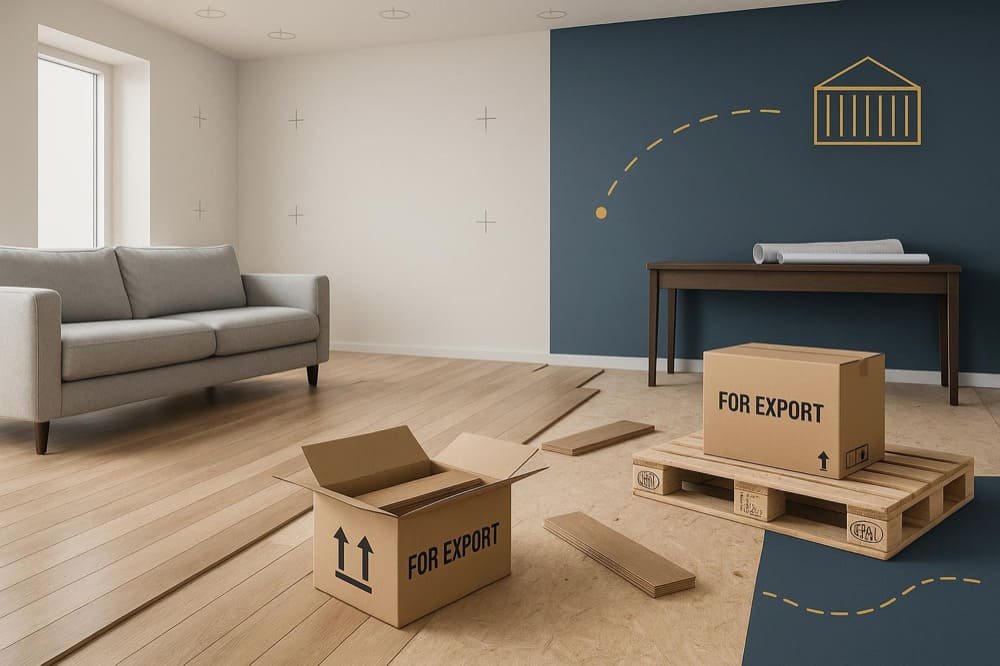
Renovating a living room isn’t just about picking a new floor or a nicer light fixture. For international buyers, the budget often lives and dies by logistics, compliance, and execution details like export packaging and pre-shipment inspections.
Materials typically account for only 40–50% of a full renovation budget; the rest comes from labor, freight, installation complexity, duties, and risk buffers.
Typical consumer-facing totals land around $2,500–$15,000 for a living room, with higher-end projects going beyond that—context supported by the 2025 range from the Angi overview of living room remodel costs (average around ~$8,000) Angi — How Much Does a Living Room Remodel Cost? (2025). Prices are dynamic and subject to change.
Below you’ll find three practical tiers priced per square meter (USD) that include materials + factory sourcing + international logistics (FOB/CIF where applicable) but exclude local destination labor.
Then we break down 12 cost categories with quick-reference ranges and the supply-chain details global buyers can’t ignore.
2025 Snapshot: Three Living Room Renovation Tiers (USD/sqm)
These scenario ranges include materials, factory-direct sourcing coordination, export packaging, and international freight/insurance estimates. They exclude destination country labor, permits, and taxes/duties unless noted.
| Tier | Scope | Typical Works | Range (USD/sqm) |
|---|---|---|---|
| Refresh (Cosmetic) | Finish-only uplift | Paint, basic lighting swap, soft goods | $80–$150 |
| Mid-Range Update | Surfaces + fixtures | New flooring, millwork finishes, built-ins | $150–$300 |
| Full Remodel | Structural/custom | Layout tweaks, electrical upgrades, premium finishes | $300–$600+ |
What drives the spread? Product specs (e.g., SPC vs. engineered wood), fixture and millwork complexity, consolidated vs. fragmented shipments, packaging standards (ISPM-15), and region-specific adders like VAT and customs.
Factory-direct savings snapshot from cross-border projects: custom millwork 25–40%, flooring 20–35%, lighting 30–50%, and stone 25–45% versus typical local retail + installer markups—assuming proper specifications, samples, and pre-shipment QC.
Callout: If you plan factory-direct coordination for materials sourcing, consolidated logistics, and QC, consider engaging a specialized partner such as ChinaBestBuy to help standardize finishes, coordinate multi-factory orders, and arrange compliant export packaging.
The 12 Cost Categories (with ranges, risks, and sourcing notes)
Each mini-table provides planning ranges in USD. Unless stated, ranges focus on materials + cross-border sourcing/logistics and exclude destination labor.
1) Design & Planning
- Planning allowance: 2–5% of materials/logistics budget (higher for structural or bespoke millwork).
- Includes: concepting, technical drawings, finish schedules, coordination.
- Why it matters: Clear drawings reduce rework and freight delays. Early specification of coatings, moisture resistance, and hardware standards ensures factories quote apples-to-apples.
Typical pitfalls: Late sample approvals; unclear tolerance/finish levels; missing certification requirements (CE, FSC, RoHS) for target markets.
2) Demolition / Site Prep / Disposal
- Planning range: $2–$10/sq ft for interior demo and disposal (local-labor context; verify regionally). Consumer guides cluster around these figures in 2024–2025.
- Scope: Removing old flooring/walls/fixtures, surface prep, hauling waste.
Risk note: Hazardous material findings (asbestos/lead) drive extra cost and schedule. Always verify local permit needs before ordering materials.
3) Flooring (materials + cross-border logistics)
Common material ranges (materials only; per sq ft):
- Carpet $1–$6; Laminate $1–$5; LVT/LVP (incl. SPC/WPC) $2–$10; Tile $2–$9 (stone $6–$15+); Engineered hardwood $2–$14; Solid hardwood $4–$15+.
- Installation (local labor) often adds $2–$8/sq ft in many markets.
Evidence anchor: 2025 category guides show similar magnitudes for materials and install adders; see the combined flooring cost context in Angi’s new flooring cost guide (2025).
China sourcing note: Direct from SPC/WPC/LVT and engineered wood producers can reduce material spend ~20–35% versus layered distributor markups. Ensure locking system specs, wear layer thickness, and moisture barrier packaging.
4) Walls / Paint / Paneling
- Paint per room: ~$600–$2,000 (size/condition dependent).
- Typical all-in paint range (materials + labor) often falls around $2–$6/sq ft; verify locally.
- Wall paneling: $1–$40/sq ft depending on material and profile.
- Evidence anchor: See 2025 paint cost ranges summarized in HomeGuide’s room painting cost.
Sourcing note: For paneling/veneers heading to the EU, align with CE/EN standards (e.g., EN 13986 for wood-based panels) and request FSC documentation when sustainability claims matter.
5) Ceiling / Lighting
- Recessed lighting installation commonly priced at roughly $100–$300 per fixture (materials + labor), with totals scaling by patching/paint and electrical routes. See HomeAdvisor’s recessed lighting cost guide (2025).
- General fixture installation can span $100–$650 per point depending on complexity.
China sourcing note: ODM/OEM lighting with certified drivers (CE/RoHS for EU) and photometric specs can trim 30–50% off designer-marked alternatives if you manage compatibility and approvals.
6) Millwork & Built-ins
- Small built-ins: ~$1,000–$3,000.
- Mid-size media walls: ~$3,000–$7,000.
- Large/custom systems: $7,000–$20,000+ depending on finishes, hardware, and integration.
Sourcing note: Factory-direct custom millwork typically saves ~25–40% with the right QA—approve finish swatches and run first-article inspection to lock construction details (moisture content, coating thickness, joinery).
7) Doors & Windows (living room relevant)
- Replacement windows (installed): ~$500–$1,200 each; specialty bay/bow units $1,700–$3,800+ depending on glazing and size—see This Old House’s 2025 window replacement cost.
- Interior doors (installed): ~$225–$825 typical; exterior doors cost more.
Compliance note: For EU-bound exterior joinery, verify CE under the Construction Products Regulation and ensure DoP documentation. Specify U-value, SHGC, and sealing standards; reinforce export packaging for glass.
8) Fixtures & Hardware
- Planning allowance: $200–$600 for a typical living room (handles, pulls, brackets, tracks), with wide variability.
- Labor to install hardware can add meaningful cost when quantities grow; plan the scope by count and finishes.
Sourcing note: Consolidating hardware SKUs across suppliers reduces mismatch risk and simplifies packaging/palletization.
9) Furnishings / Soft Goods
- Typical furnishing package ranges widely by brand and customization: ~$3,000–$7,000 standard; low-end bundles can be ~$1,500; luxury can exceed $25,000.
- Includes sofa/sectional, rug(s), media console, coffee/side tables, shelving, window treatments, and decor.
Risk note: Large-format furniture and stone tops are freight- and damage-sensitive. Insist on moisture and edge protection, corner guards, and drop-test-validated packaging.
10) Labor / Installation (context for total budget)
- Trade rates vary by country and city; common U.S. references show electricians ~$50–$130/hr, finish carpenters often higher in major metros, and painters frequently priced by sq ft. Use local quotes to budget accurately.
Planning tip: Your tier tables exclude local labor. Obtain 2–3 installer quotes early and coordinate delivery windows to avoid standing time.
11) Logistics / Shipping (international)
- Container freight benchmarks (volatile): Asia → US West Coast often ranges in the low-thousands per 40′ with surcharges during peak or disruption periods; see the reference calculator for current spot context at Freightos’ container shipping cost tool.
- As a planning proxy, shipping and insurance together often total ~5–15% of goods value for bulky building materials, with marine cargo insurance ~0.3–1.0% depending on coverage.
- Packaging compliance: Many countries enforce ISPM-15 for solid wood packaging. Heat-treat pallets to 56°C for 30 minutes and mark with the IPPC stamp; see USDA APHIS guidance on wood packaging material.
- Incoterms: Know who pays for what at each handoff. Review FOB/CIF responsibilities in Trade Finance Global’s Incoterms explainer.
Execution tip: Consolidate multi-factory orders into fewer containers, standardize carton sizes, and lock a master packing plan to reduce damage and port fees.
12) Taxes / Duties / Contingency
- Duties and VAT are commodity- and country-specific. In the EU, many Member States levy ~20–25% VAT on imports (verify exact rate). North America has no VAT but may apply tariffs to certain materials. The European Commission’s VAT portal is a good first stop: EC VAT for businesses.
- Always reserve a 10% contingency on the materials/logistics portion to cover rework, spec clarifications, or freight volatility.
Regional Modifiers to Apply
- EU: Add country-specific VAT (often ~20–25%) and confirm CE/CPR compliance where required. Expect stricter documentation (DoP, test reports) to clear customs smoothly.
- Middle East: Emphasize ISPM-15 pallets, detailed packing lists, and HS code accuracy. Tariffs vary widely; pre-clear samples when possible.
- Australia: Biosecurity is strict—ISPM-15 compliance and potential fumigation. Confirm any import permits for composite wood or natural materials.
- North America: No VAT but longer sea routes can raise freight share. Watch tariffs on certain wood products and fixtures; align delivery windows with installers to avoid storage fees.
How We Built These Ranges (and What to Verify Locally)
Scope definition: Tiers include materials + factory sourcing + export packaging + international freight/insurance, excluding destination labor, permits, and local taxes.
Data triangulation: We referenced 2024–2025 cost guides and trade resources and normalized them to cross-border scenarios.
- Overall living room range and averages: see the 2025 overview in Angi’s living room remodel cost.
- Paint ranges: HomeGuide’s room painting cost (2025).
- Flooring materials/install context: Angi’s new flooring cost (2025).
- Lighting installation: HomeAdvisor recessed lighting cost (2025).
- Windows: This Old House window replacement cost (2025).
- Freight benchmarks: Freightos container shipping cost tool.
- Packaging compliance: USDA APHIS wood packaging material.
- Incoterms responsibilities: Trade Finance Global (FOB/CIF).
Variability disclosures: Prices are subject to change with inflation, freight conditions, and specification choices. Always confirm duties/tariffs with official customs sources and obtain written installer quotes in your locale.
Practical Ways to Keep Your Budget on Track
- Consolidate orders and ship fewer, fuller containers.
- Standardize finishes across suppliers to prevent color/texture mismatch and rework.
- Approve samples early and run first-article plus batch QC before final payment.
- Specify certs up front (CE/FSC/ISO/RoHS as applicable) and lock a packing standard (ISPM-15 pallets, moisture barriers, corner guards).
- Hold a 10% contingency on materials/logistics to absorb disruptions.
Closing Thought
A well-run living room renovation isn’t just a shopping list—it’s a coordinated supply-chain project. If you pursue factory-direct sourcing, bring in an experienced integrator to align specifications, QC, packaging, and shipping windows so your site install flows without surprises.