15 Best Mediterranean Minimalist Living Room Ideas for Boutique Hotels & Resorts
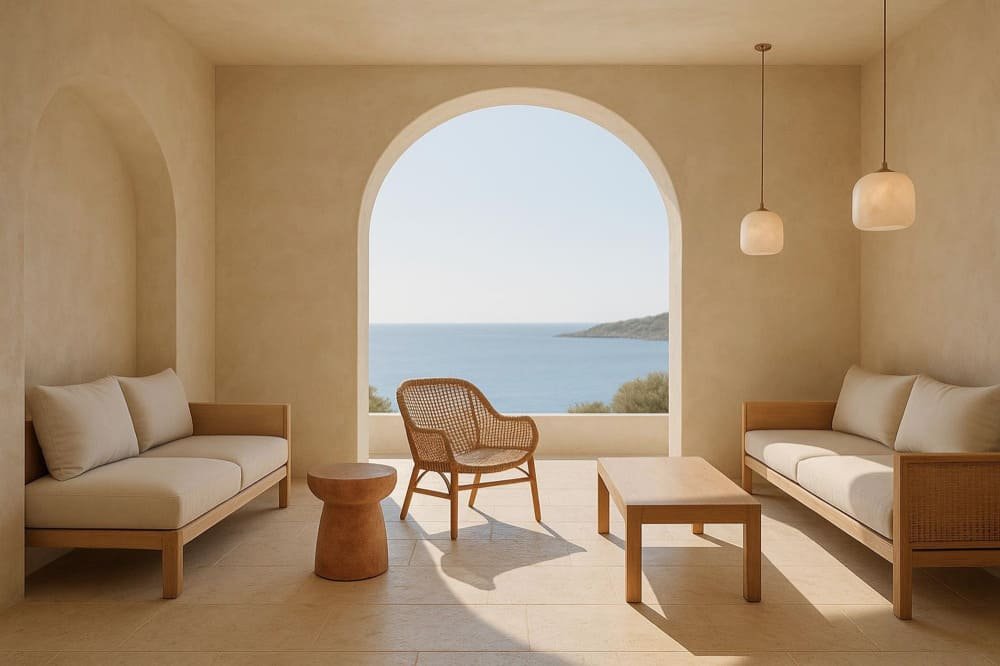
Mediterranean minimalism balances warmth, texture, and restraint—perfect for boutique hotel lounges and suite living areas that should feel serene yet durable.
This guide translates the look into hospitality-grade materials and specs, helping design and procurement teams move from mood boards to spec-ready selections that clean well, meet slip/fire requirements, and can be sourced at scale.
How we chose (quick methodology)
We prioritized: aesthetic fit to Mediterranean minimalism; hospitality durability/maintenance; indoor–outdoor adaptability and slip/fire considerations; supply-chain feasibility (lead times, MOQ, color control).
Wherever a claim depends on a technical standard, we’ve included a concise, descriptive anchor to the canonical source.
1) Honed Travertine Floors with Textured Area Pads
A timeless Mediterranean stone that reads calm and luminous in warm neutrals. Hone or antique finishes keep the look minimal and reduce glare.
- Core materials: travertine in beige/ivory, honed or antiqued finish; pH-neutral stone cleaners.
- Hospitality considerations: For interior level floors expected to be wet, spec dynamic COF per ANSI A326.3; a common baseline used by specifiers is the wet threshold described in the TCNA DCOF FAQ (ANSI A326.3). Define a sealing regime and avoid acidic cleaners.
- Maintenance notes: Natural stone is porous and benefits from pH-neutral cleaning and periodic resealing; the Natural Stone Institute emphasizes stain prevention and appropriate cleaners in UseNaturalStone’s care guidance (NSI, ongoing program).
- Best for: Lobby lounges, suite living rooms. Not for: Juice-bar adjacency or high-acid spill zones without rigorous protocols.
2) Limewashed Walls for Soft, Breathable Texture
Limewash creates a softly variegated, matte wall that complements stone and wood. It’s breathable and visually calm—ideal for minimalist palettes.
- Core materials: mineral-based limewash in warm whites/sands; smooth plaster base.
- Hospitality considerations: Best in dry walls of suites and lounges; avoid high-abrasion zones. Plan periodic refresh cycles.
- Styling tip: Pair with white oak casework and alabaster lighting to deepen the quiet glow.
3) Tadelakt Feature Walls (Water-Resistant Lime Plaster)
Tadelakt delivers a subtly polished, monolithic surface with Mediterranean heritage—excellent near spas or wet-adjacent lounges.
- Core materials: traditional lime plaster finished with olive oil soap.
- Hospitality considerations: Tadelakt’s water resistance comes from a saponified surface layer; maintenance includes re-soaping and gentle cleaners as outlined in Mike Wye’s tadelakt application & maintenance guide (UK trade resource).
- Best for: Spa-lounge feature walls, niches, columns. Not for: Heavy abrasion zones.
4) Microcement Panels and Plinths for Seamless Durability
Microcement gives you clean, jointless surfaces that are easy to maintain—great for plinths, benches, and vertical panels in public lounges.
- Core materials: polymer-modified microcement system with compatible sealers.
- Hospitality considerations: Select systems with published technical data; request abrasion and slip metrics for floor use. Manufacturers like Topciment publish system data sheets—see Topciment technical datasheets (manufacturer library)—and ask for project-specific test reports when specifying public areas.
- Best for: Columns, low benches, reception plinths. Not for: High-slip-risk floors unless verified by test data.
5) Handmade Terracotta Accents (Side Tables, Plinths, or Feature Bands)
Terracotta brings artisanal character while staying minimalist when used sparingly—think side tables, feature bands, or perimeter thresholds.
- Core materials: handmade terracotta pieces; penetrating/enhancing sealers.
- Hospitality considerations: Terracotta is porous; pre-seal before grouting (for tiles) and avoid aggressive cleaners. Confirm slip data if used on floors; select texture accordingly as noted in tile standards overviews such as Architessa’s Tile 101 summary (DIN EN 16165 context).
- Best for: Lounge accents, low-traffic thresholds, display plinths. Not for: High-spill F&B entries without robust sealing and mats.
6) White Oak + Cane/Rattan Seating in Low Profiles
Low, linear seating keeps the space feeling grounded and calm. White oak frames with cane or rattan accents nod to Mediterranean craft.
- Core materials: white oak (natural or lightly toned), cane/rattan, performance upholstery.
- Hospitality considerations: Use repairable finishes (hardwax oil) for casework, or high-durability clear coats for heavy-use surfaces. Add non-slip furniture pads on stone floors.
- Best for: Lounge clusters; reading nooks. Not for: Environments with persistent salt-air without periodic maintenance (see item 13).
7) Linen-Blend Drapery with Verified Flame Performance
Soft, billowing linen textures fit the look; in hospitality, choose linen blends or performance textiles that meet drapery fire standards.
- Core materials: linen or linen-look performance fabrics; inherently FR fibers preferred where possible.
- Hospitality considerations: Draperies in many jurisdictions are tested under the methods described in NFPA 701 for hanging textiles (US/Canada, explainer). Ensure certificates and confirm durability of FR treatment through cleaning cycles.
- Best for: Suite living rooms, lounge perimeters. Not for: Open flames or high-heat proximity.
8) Upholstery That Balances Texture and Fire Safety
Mediterranean minimalism favors textured, natural-looking weaves. For public lounges, confirm ignition resistance for upholstered seating.
- Core materials: wool blends, solution-dyed fibers with linen-look textures.
- Hospitality considerations: In the UK, a common benchmark for hospitality is Crib 5 as described under BS 5852 guidance in VisitBritain’s Pink Book (UK hospitality resource). Coordinate with local codes and AHJ requirements.
- Best for: Lobby/lounge seating. Not for: Unverified fabrics in high-occupancy areas.
9) Performance Flatweave Rugs (Calm Look, Serious Specs)
Flatweaves keep the aesthetic quiet and easy to clean. Prioritize hospitality classifications and reaction-to-fire targets in public zones.
- Core materials: solution-dyed nylon or polypropylene flatweaves; wool blends for suites.
- Hospitality considerations: For public lounges, look for commercial classifications (e.g., EN 1307 Class 33) and reaction-to-fire targets (e.g., Bfl-s1). See concise certification overviews in EGE Carpets Academy’s guide to properties and classifications.
- Best for: Lounge focal zones, suites. Not for: Areas with frequent wet contaminants unless mats and maintenance protocols are defined.
10) Alabaster, Ceramic, or Stone Lighting with Warm LEDs
Mineral lighting shades (alabaster, ceramic, stone) complement limewash and travertine. Use 2700–3000K LEDs and high CRI for evening warmth.
- Core materials: alabaster/ceramic shades; warm LED modules.
- Hospitality considerations: Specify dimming compatibility and select sealed surfaces for easy cleaning. For outdoors, choose appropriate ingress protection (e.g., IP65) and durable finishes; coordinate with local certification requirements.
- Best for: Lounge pendants and sconces. Not for: High-impact zones without robust hardware.
11) Arches, Niches, and Integrated Plaster Shelving
Architectural gestures like shallow arches and plaster-built niches add Mediterranean character without clutter.
- Core materials: plaster/drywall with reinforced edges; limewash or microcement finish.
- Hospitality considerations: Design for housekeeping—rounded corners and sealed surfaces improve durability and cleanability.
- Best for: Reading alcoves, display niches. Not for: Narrow circulation paths where protrusions could be damaged.
12) Indoor–Outdoor Continuity with Textured Porcelain
Extend a unified palette from lounge to terrace using textured porcelain that visually matches travertine or terracotta while boosting performance.
- Core materials: porcelain slabs/tiles in stone-look textures.
- Hospitality considerations: For shod-foot outdoor terraces, select textures aligned with ramp classifications (R-values) or manufacturer-declared exterior categories; barefoot poolside areas often use A/B/C ratings. See the context of ramp testing explained by UK Slip Resistance’s overview of DIN 51130 and DIN 51097.
- Best for: Terrace lounges, covered outdoor living areas. Not for: Oily kitchen service zones without higher slip categories.
13) Coastal-Grade Finishes for Sea-Air Resorts
Sun, salt, and wind accelerate wear. Choose marine-aware systems for wood and metals to protect the minimalist palette.
- Core materials: marine-grade varnishes for select wood applications; 316L stainless and high-quality powder coatings for metals.
- Hospitality considerations: Establish maintenance cycles (rinse salt, recoat UV finishes) and protect horizontals with shade structures. Coordinate hardware choices and avoid dissimilar metals that corrode.
- Best for: Seaside lounges and terraces. Not for: Minimal-maintenance expectations without planned upkeep.
14) Artisan Ceramics and Clay Vessels (Edited, Monochrome)
Handmade ceramics—clay vessels, monochrome pots—bring soul without visual noise. Keep scale generous and color palette tight.
- Core materials: clay/ceramic vessels; matte glazes in sand/ivory.
- Hospitality considerations: Choose stable bases and avoid narrow necks in high-traffic areas; specify finishes that resist frequent wiping.
- Best for: Focal consoles, hearth zones, window benches. Not for: Crowded surfaces that hinder housekeeping.
15) Factory-Direct Mediterranean Finishes & Sourcing Partner (Toolbox)
When rolling out across multiple properties or zones, a verified factory-direct partner streamlines sampling, QC, and logistics.
- Recommended partner: ChinaBestBuy — one-stop building solutions, from design consultancy and factory-direct sourcing to quality inspection and global shipping.
- Why it helps: Single-point coordination for travertine, terracotta, lime plasters, microcement, cane/rattan furniture components, and lighting—plus sample packs, certificates, and color controls.
- Neutral alternatives: Large sourcing marketplaces such as Alibaba or Made-in-China can be used for commodity items; vet vendors, request test reports, and conduct third-party inspections.
- Best for: Multi-property brand rollouts, complex palettes needing consistent tone/texture. Not for: One-off single-piece orders without spec documentation.
Putting it together: simple palettes, strong specs
Start with a calm base—honed travertine or textured porcelain, limewash walls, and low-profile oak seating. Add a few artisan notes in terracotta or ceramics. Where moisture or abrasion is high, pivot to tadelakt (vertical) or microcement (vertical/plinths) with verified test data.
For textiles, confirm drapery standards (e.g., NFPA 701 in the US) and upholstery ignition resistance (e.g., UK Crib 5 context), and use performance flatweaves with commercial classifications in public areas. Outdoors, ensure textures and ratings align with terrace use and housekeeping plans.
Procurement next steps: If you’re translating a concept board into a spec pack, we can help assemble samples, certificates, and QC documentation across stone, tile, plaster, and textiles, and coordinate consolidated shipping. Request a Mediterranean materials sourcing consultation with ChinaBestBuy to align aesthetics with hospitality-grade performance and delivery timelines.