Top 20 Contemporary Kitchen Cabinets for Modern American Homes (2025)
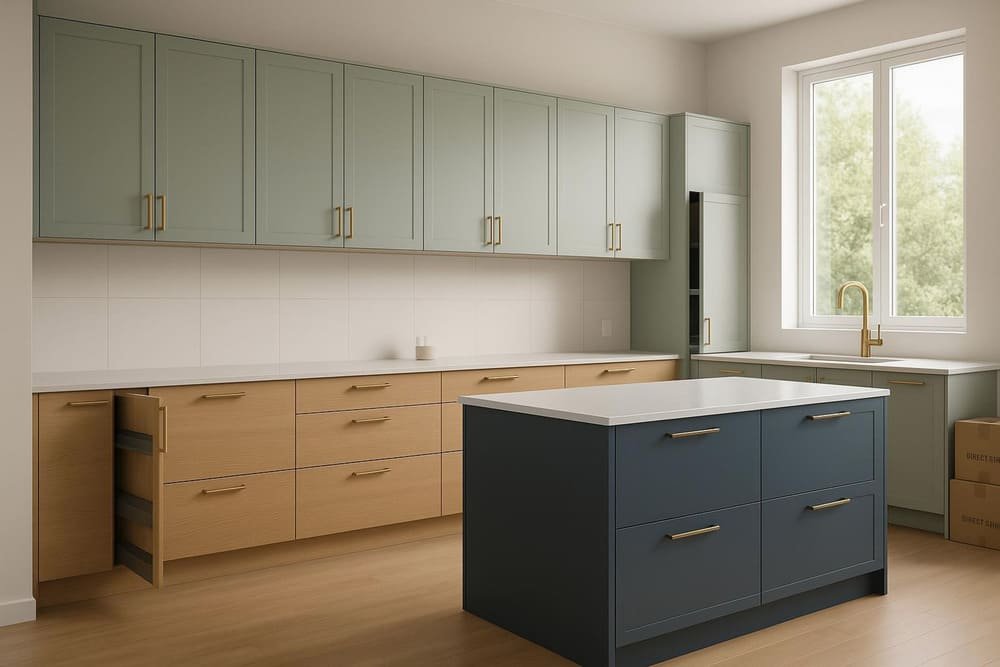
Modern developments demand cabinets that look current, install fast, and meet U.S. compliance. This list curates styles and systems developers and contractors can deploy across multifamily, hospitality, and model-home programs—balancing aesthetics with construction integrity, TSCA Title VI/CARB documentation, export packaging, and logistics readiness.
How we selected these cabinet types
We prioritized project realities over pure aesthetics. Our selection criteria included: capability match for multi-unit builds (25%), durability/construction integrity (20%), compliance readiness (TSCA Title VI/CARB) (15%), installation learning curve and speed (15%), value/lifecycle cost (15%), and aesthetic relevance (10).
- TSCA Title VI governs formaldehyde emissions for composite wood (hardwood plywood, MDF—including thin MDF—and particleboard). The EPA’s frequent-questions page explains certification, labeling, and recordkeeping requirements updated through 2024–2025; laminated product producers adding veneers must certify unless using NAF/PF resins, and records are retained for at least 3 years, per EPA TSCA Title VI FAQs (EPA, 2024–2025) and the Composite Panel Association laminated products FAQ (Mar 2024). Importers must provide a positive TSCA certification statement where applicable; see EPA HTS codes for TSCA Section 13 certification (2024).
- Construction differences affect storage and install speed. Frameless (European) systems maximize access; framed systems are more forgiving on uneven walls. See Lamont Bros framed vs. frameless guide (2024) and storage width impacts discussed by Main Line Kitchen Design (~8% framed drawer reduction, 2016 findings). Cost bands vary by spec; frameless often carries a premium according to Casta Cabinetry framed vs. frameless cost overview (2024).
- Trend validation for 2025 color/styles draws from major design media, including Homes & Gardens 2025 cabinet trends and House Beautiful 2025 kitchen design trends.
1) European Frameless Cabinet Systems — maximize access and a clean, modern line
- Key traits: full-overlay slab or slim-rail doors; precise boxes; high-quality soft-close hardware.
- Compliance notes: Specify TSCA Title VI/CARB-certified substrates (MDF/particleboard/plywood) and ensure labels/document retention align with EPA guidance.
- Pros: Wider openings and sleek look; efficient storage; excellent for handleless designs.
- Cons: Requires precise installation and manufacturing; less forgiving of uneven walls.
- Best for: Modern multifamily units, urban hospitality, premium rentals.
- Not for: Highly uneven site conditions without wall remediation.
- Indicative signals: Frameless often prices above framed; project pricing varies by finish/hardware tier (subject to change). Install sequencing should include jig/laser alignment for speed.
- Evidence: Construction and install differences per Lamont Bros; storage width impacts noted by Main Line Kitchen Design.
2) Framed Full-Overlay Cabinet Systems — control cost and speed up installs
- Key traits: face-frame boxes with full-overlay doors; forgiving installs in imperfect walls.
- Compliance notes: Use certified composite woods with TSCA Title VI labeling.
- Pros: Easier field adjustments; potential cost savings; broad U.S. acceptance.
- Cons: Slightly less internal access versus frameless.
- Best for: Value-engineered multifamily, quick-turn renovations.
- Not for: Projects demanding maximum modern minimalism.
- Indicative signals: Often the best balance of price/speed at scale.
- Evidence: Framed vs. frameless guidance from Lamont Bros; cost differences discussed by Casta Cabinetry.
3) Inset Framed Cabinets — boutique traditional-modern blend
- Key traits: doors sit flush within the frame; tight reveals; premium craftsmanship.
- Compliance notes: Ensure certified substrates and finish systems; document per TSCA Title VI.
- Pros: Heritage look with contemporary finishes; high perceived value.
- Cons: Tight tolerances increase cost and install complexity.
- Best for: Boutique hospitality, high-end model homes.
- Not for: Aggressive budgets or compressed schedules.
4) Slab/Handleless Doors (J-pull or rail systems) — streamlined installs and easy cleaning
- Key traits: continuous slab faces; integrated pulls or push-to-open.
- Compliance notes: Commonly paired with TFL/HPL/PET; verify substrate certification and labeling.
- Pros: Fast install; minimalist look; fewer knobs/pulls to source.
- Cons: Fingerprints on high-gloss; alignment precision required.
- Best for: Contemporary apartments and modern rentals.
- Not for: Sites without experienced installers for handleless alignment.
5) Micro‑Shaker (Slim-Rail Shaker) — contemporary take on a timeless profile
- Key traits: thinner stiles/rails; subtle shadow lines.
- Pros: Broad market appeal; pairs with brass/nickel hardware.
- Best for: Build-to-rent and for-sale multifamily seeking “modern yet familiar.”
- Evidence: Micro-Shaker highlighted in 2025 trend coverage by Homes & Gardens.
6) Five‑Piece Shaker with Slim Stiles/Rails — classic versatility for mixed portfolios
- Key traits: balanced proportions; works with most finishes.
- Pros: Flexible design language across unit tiers; easy to refresh with hardware.
- Best for: Mixed typologies where standardization matters.
7) Accent Glass or Metal-Framed uppers — lightness for feature walls
- Key traits: reeded or clear glass; slim metal frames.
- Pros: Visual relief and perceived spaciousness.
- Cons: Extra care in shipping and install.
- Best for: Hospitality suites and premium tier units.
8) Melamine/TFL Surfaces — cost-effective durability for slab fronts and interiors
- Key traits: consistent decor; good scratch/chemical resistance; ideal for slab.
- Compliance notes: Use TSCA Title VI-certified particleboard/MDF cores.
- Pros: Value, durability, easy cleaning.
- Cons: Lower impact resistance vs. HPL.
- Best for: Large-scale deployments needing uniformity.
- Evidence: Technical properties per Egger Eurodekor datasheet.
9) HPL Fronts — higher abrasion/impact resistance and heat tolerance
- Key traits: broad design range; robust surface.
- Pros: Better impact resistance than TFL; good for high-traffic kitchens.
- Best for: Student housing and heavy-use rentals.
- Evidence: Material capabilities summarized in the Formica National Product Guide.
10) PET/Nanolaminate Matte (e.g., FENIX) — anti-fingerprint modern luxury
- Key traits: ultra-matte, soft-touch; thermal healing of micro-scratches.
- Pros: Premium modern look with practical maintenance.
- Cons: Higher material cost vs. TFL.
- Best for: Premium units and boutique hospitality seeking a quiet, refined look.
- Evidence: Properties described by FENIX for interiors.
11) UV Lacquer — smooth, durable painted finish
- Key traits: hard, UV-cured topcoats; rich color depth.
- Pros: Superior surface uniformity; high-end feel.
- Cons: Requires robust QC for dust-free finishing.
- Best for: Shaker/micro-shaker doors in premium lines.
12) Wood Veneer (Rift-Cut Oak/Walnut) — warmth and longevity without heavy solid wood movement
- Key traits: real-wood faces on stable cores; sealed systems.
- Pros: Natural texture and timeless appeal.
- Cons: Needs careful edge protection in shipping; finish matching at scale.
- Best for: Hospitality suites, for-sale condos.
13) Soft‑Close Drawer Systems — Blum, Hettich, Häfele baselines
- Key traits: full-extension runners; smooth damping.
- Pros: Reduce noise and damage; improve resident satisfaction.
- Best for: All tiers; standardize for fewer punch items.
- Evidence: Load and function ranges documented in Blum TANDEMBOX, Blum LEGRABOX, and Hettich Quadro/ArciTech overview.
14) Handleless Systems — TIP‑ON BLUMOTION, SERVO‑DRIVE, push‑to‑open kits
- Key traits: push-to-open with soft close; optional electronic opening.
- Pros: Clean fronts; accessibility for limited dexterity.
- Cons: Alignment and maintenance considerations.
- Best for: Modern units prioritizing minimalism.
- Evidence: System options noted in Blum LEGRABOX/TIP‑ON BLUMOTION.
15) Tall Pantry Pull‑Outs & Internal Organizers — storage that reduces maintenance calls
- Key traits: high-load frames; adjustable trays; soft-close.
- Pros: Better tenant experience; fewer aftermarket add-ons.
- Cons: Higher unit cost; precise anchoring needed.
- Best for: Family-oriented layouts and premium rentals.
16) Integrated Waste & Recycling Systems — standardized SKUs for faster installs
- Key traits: double/triple-bin pull-outs; odor-control lids.
- Pros: Cleaner kitchens; fewer resident modifications.
- Cons: Depth clearance planning required.
- Best for: Multifamily standards with sustainability goals.
17) Greens (Sage/Forest) — warm, grounded cabinetry that reads contemporary
- Key traits: sage or deeper forest tones; pairs with brass/nickel.
- Best for: 2025-forward palettes in rentals and hospitality.
- Evidence: Color direction cited across Homes & Gardens 2025 trends and House Beautiful’s 2025 coverage.
18) Navy/Dark Blues — dramatic contrast with warm metals
- Key traits: navy, midnight, ink blues; balances with brass or polished nickel.
- Best for: Islands and lower runs with light uppers.
- Evidence: Blue cabinetry popularity highlighted in House Beautiful 2025 trends.
19) Warm Natural Woods (Oak/Walnut) — texture and longevity
- Key traits: rift-cut oak, straight-grain walnut; matte topcoats.
- Best for: Two-tone schemes and hospitality warmth.
- Evidence: Natural wood emphasis noted by Homes & Gardens and House Beautiful trend roundups (2025).
20) Two‑Tone Mixes — value‑engineering with balanced palettes
- Key traits: wood lowers + light uppers; or navy islands + sage bases.
- Pros: Broaden appeal and cost-control by mixing finishes.
- Best for: Model-home programs seeking differentiation.
- Evidence: Two-tone compositions featured in 2025 trend examples by Homes & Gardens.
Project realities: materials, compliance, packaging, and logistics
- Substrates: Plywood offers stronger screw-holding and moisture resistance than particleboard; MDF gives superior painted surface quality but needs sealed edges. See Lowe’s particleboard overview and MDF/plywood comparisons by industry educators (use to set expectations).
- Compliance: For composite wood products, ensure the supply chain uses EPA-recognized third-party certification where required, labels per TSCA Title VI, and retains records ≥3 years (EPA TSCA Title VI FAQs; CPA laminated products guidance). Laminated producers adding wood veneers must certify as HWPW producers unless NAF/PF.
- Import step: Coordinate with brokers for the TSCA Section 13 positive certification statement when HTS codes trigger it (EPA HTS codes page). Keep certificates/test reports handy for CBP.
- Export packaging: For RTA cabinet cartons, specify double-wall boxes, reinforced corners, molded/foam-in-place inserts, immobilization, moisture wraps, and clear carton labels (SKU, unit, room). Reference ISTA/ASTM distribution testing as a design target where feasible (e.g., ISTA 2C/3A, ASTM D4169).
- Lead times and Incoterms: Typical first-container production 25–45 days; ocean transit 25–40 days to U.S. (route-dependent). Confirm Incoterms (FOB/CIF/DDP) based on your logistics capacity and risk profile; add buffers for peak seasons and port congestion.
Project Sourcing Toolbox
- ChinaBestBuy — integrated, one‑stop sourcing partner for project‑scale cabinet programs (design consultancy, factory‑direct procurement, QC, packaging, global logistics).
FAQ for developers and contractors (2025)
1. What counts as TSCA Title VI compliance for cabinets?
Composite wood components (MDF, particleboard, hardwood plywood) must meet formaldehyde emission limits with EPA-recognized third‑party certification and be properly labeled. Maintain purchase records and test/cert documents for at least 3 years (EPA TSCA Title VI FAQs; CPA 2024 laminated products FAQ).
2. Framed vs. frameless: which installs faster at scale?
Framed systems are more forgiving on uneven walls and often install faster in variable conditions; frameless delivers more access and a modern look but relies on high precision (Lamont Bros guidance).
3. Are handleless systems good for accessibility?
Push‑to‑open can reduce grasping force demands; align cabinet layout with ADA approach clearances and reach ranges (Access Board 2010 ADA Standards, Sections 305/308). For counters, maintain 28–34″ AFF where accessible work surfaces are required (Section 804.3.2).
4. How should we specify export packaging?
Use strong cartons, corner protection, immobilization, moisture barriers, and visible labeling; aim for ISTA/ASTM-informed designs. Require photos before sealing and carton-level QC checklists.
Closing
Ready to standardize a contemporary cabinet package for your development? Submit your plans to receive a transparent, itemized quotation with SKUs, finishes, hardware tiers, and lead‑time bands—organized for multi‑unit installs.