How to Define “True High-End Furniture” (For Hospitality and Commercial Projects)
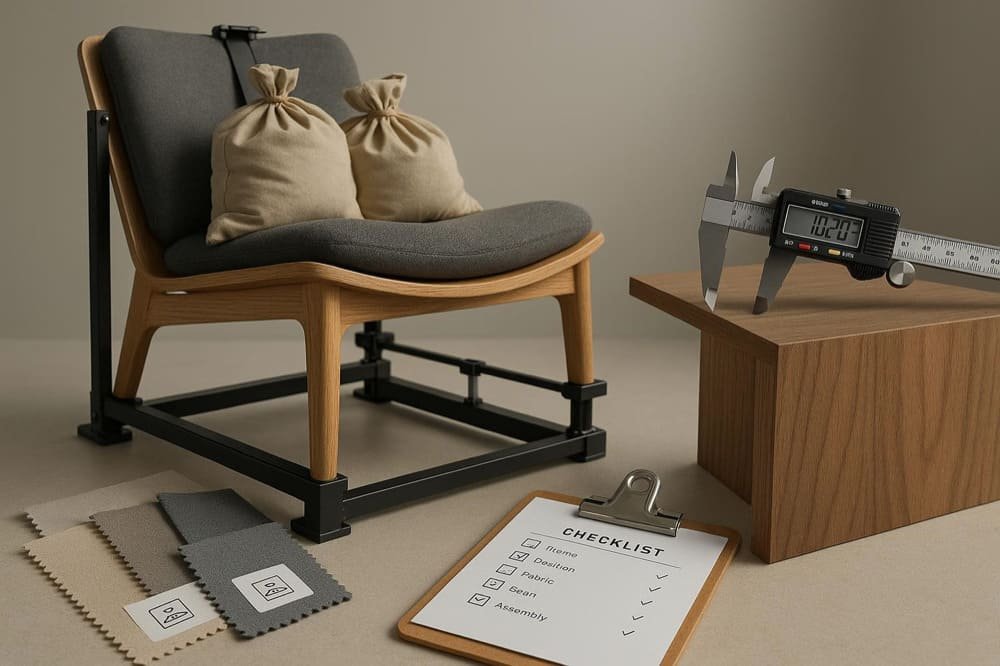
When “luxury-look” furniture hits real-world hotel lobbies, guest rooms, and busy reception areas, appearances alone can’t carry the load.
True high-end furniture proves its quality through standardized testing, materials and construction you can specify, and factory processes you can audit—so pieces stay safe, comfortable, and presentable through years of commercial use.
In other words: price and design language are not the definition. Verified performance is.
For seating, that means meeting applicable durability/safety standards like the public and lounge seating standard reaffirmed in 2025, ANSI/BIFMA X5.4-2020 (R2025), as described in BIFMA’s standards overview, and using construction that actually supports those results.
For panels and casework, it means emissions compliance (e.g., EPA TSCA Title VI in the U.S.) and finish systems that resist abrasion, staining, and moisture.
Key takeaways
- Define “high-end” by testable performance under contract use, not by price or brand.
- Use recognized standards (BIFMA/EN for seating; TB117-2013, BS 5852, or NFPA 260 for flammability; TSCA Title VI or E1 (EN 717-1)) as gating criteria with documentation.
- Validate factories with quality systems, process controls, and AQL inspections; request third-party test reports and material COAs.
- Adapt specs to environment (coastal humidity, high traffic) to protect lifecycle and total cost of ownership (TCO).
Common myths (and what the evidence says)
- Myth: “If it’s expensive or designer-labeled, it’s high-end.” Reality: Standards compliance is a baseline. For public/lounge seating, see the description of ANSI/BIFMA X5.4-2020 (R2025) reaffirmation and BIFMA’s standards overview that defines scope and purpose of these durability and safety tests.
- Myth: “Solid wood everywhere is always better.” Reality: Engineered cores (e.g., plywood) improve dimensional stability for tops and panels; solid hardwood is best reserved for stress points and structural members. Architectural woodwork standards and materials guidance help set veneer and panel expectations for durability and refinishing.
- Myth: “Higher abrasion ‘double rubs’ automatically means longer fabric life.” Reality: The contract textiles association cautions that abrasion numbers alone don’t guarantee lifespan; you also need seam strength, pilling, colorfastness, and construction suited to use. See ACT Performance Guidelines.
- Myth: “Heavier equals stronger.” Reality: Weight can come from dense but brittle substrates or thick finishes; only standardized load and cycle tests (e.g., EN 16139 / EN 1728 for non-domestic seating per BSI client guidance) confirm real-world durability.
The 10-point “True High-End” specification checklist (RFP-ready)
- Frames and joinery
- Specify kiln-dried hardwood at stress points; engineered plywood for stability elsewhere. Use mortise-and-tenon or dowel joinery with corner blocking and moisture-tolerant structural adhesives. Align seating to the applicable BIFMA or EN standard (e.g., BIFMA X5.4 for public/lounge seating, or EN 16139 with EN 1728 test methods as noted by BSI) as a pass/fail gate.
- Surfaces and veneers
- For refined wood looks, require architectural-grade veneers with adequate thickness (commonly ≥0.6 mm in hospitality to allow refinishing) and consistent grain matching; back up with architectural woodwork materials references that outline veneer quality expectations and panel construction.
- Finishes and laminates
- Use multi-layer catalyzed/PU/AC finishes engineered for abrasion, stain/chemical, UV, and moisture resistance. For high-pressure laminate (HPL) applications, reference the characteristics and tests defined by EN 438 or NEMA LD 3 to set abrasion and stain performance expectations.
- Hardware and corrosion resistance
- Specify brand-grade hinges and slides with verified cycle testing. In coastal or humid markets, require corrosion resistance validated by salt spray exposure per the ISO 9227 test method; set project-specific exposure hours and select suitable stainless or treated alloys.
- Textiles (fabrics and leathers)
- Follow ACT performance guidelines: specify abrasion method (ASTM D4157 Wyzenbeek or ASTM D4966 Martindale) with appropriate thresholds for use, plus seam slippage, pilling, crocking, breaking strength, and lightfastness. ACT emphasizes balanced performance over extreme abrasion numbers alone.
- Cushions and suspension
- Write foam specs by density and ILD/IFD using the ASTM D3574 test framework for methods; pair with webbing or sinuous springs to maintain comfort and recovery. For hospitality lounge seating, multi-layer cushioning and topper foams help resist early sag.
- Tops and panels (and emissions)
- Match substrate to environment: moisture-resistant MDF (MDF.H per EN 622-5) or marine-grade plywood where justified; seal all edges. For emissions, require TSCA Title VI in the U.S., with EPA-recognized TPC certification details and labels, or E1 classification verified by EN 717-1 chamber testing in EU/UK projects.
- Structural/durability tests (seating)
- Require applicable ANSI/BIFMA or EN documentation. For North America, reference the BIFMA standards overview and, where relevant, X5.1 (office/general seating), which BIFMA notes is under revision activity; for EU/UK, specify EN 16139 Levels and EN 1728 methods via BSI guidance.
- Flammability compliance (upholstery)
- In the U.S., default to California TB117-2013 component-level smolder resistance with correct labeling as outlined in the official bulletin and FAQ. Where required, reference NFPA 260 classification for components in certain jurisdictions. In the UK, many hospitality settings require BS 5852 (Crib 5) composite testing, grounded in the UK legal framework and supported by technical guides from testing bodies like FIRA.
- Documentation, QC, and warranty
- Factory credentials: verify ISO 9001 quality management scope matches furniture production using ISO guidance on scope statements, and request FSC Chain of Custody where responsible wood sourcing is required.
- QC artifacts: plan incoming, in-line, and final inspections; use sampling per ISO 2859-1 or ANSI/ASQ Z1.4 (General Inspection Level II; typical AQL 2.5 for general defects) as explained in ASQ’s overview and ISO’s standard entry; retain golden samples and require serialization for traceability.
- Documentation: request third-party test reports, material COAs, finish data sheets, packaging specs, and a written structural warranty (commonly 3–5 years for contract items as an industry practice).
Mini case study: The lobby seating that failed—and the spec that fixed it
A 200-key city hotel furnished its lobby with “luxury-look” lounge chairs: thin face veneers over particleboard cores, unbranded hinges, single-density conventional foam cushions, and no documented seating standard compliance. Within 18 months, staff reported veneer edge chipping and telegraphing, chronic wobble, and foam collapse that flattened seat comfort scores.
The replacement program rewrote the specification:
- Frames: kiln-dried hardwood rails with plywood panels; glued and blocked mortise-and-tenon/dowel joints; seats specified to pass the public/lounge seating durability regime described in ANSI/BIFMA X5.4.
- Surfaces: architectural-grade veneer at ~0.6 mm nominal with sealed edges and carefully matched grain, referencing architectural woodwork materials guidance.
- Finishes: multi-layer catalyzed system with documented abrasion and stain resistance values comparable to EN 438 laminate performance categories on adjacent casework.
- Upholstery: contract textile meeting ACT guidelines for abrasion, seam strength, and colorfastness; cushions specified by density and ILD/IFD per ASTM D3574 methods; suspension upgraded to sinuous springs with layer-built foams for recovery.
- QC and documentation: supplier provided TSCA Title VI labels for composite panels, TB117-2013 labels and fabric test data, and a 5-year structural warranty.
Results: The upgraded lobby set maintained structure and comfort through heavy use for multiple years, reducing touch-up and replacement cycles. Guest comfort scores stabilized, and maintenance downtime fell significantly—an outcome consistent with aligning specs to recognized test standards and emissions requirements cited above.
How to validate a supplier (especially when sourcing from China)
Audit credentials and scope
- Confirm ISO 9001 certification scope matches furniture manufacturing and the products in question per ISO’s guidance on scope clarity; check FSC Chain of Custody numbers if specified.
Lock in standards and documentation
- Before PO, stipulate applicable seating standard (e.g., BIFMA X5.4 or EN 16139/1728) per BSI guidance, flammability regime (TB117-2013, BS 5852 Crib 5, or NFPA 260 as applicable), and emissions (TSCA Title VI or E1). Require third-party reports and labeling/lab compliance per EPA TSCA Title VI program pages for U.S.-bound goods.
Build a QC plan
- Use ISO 2859-1/ANSI Z1.4 sampling. For many hospitality programs, General Inspection Level II, AQL 2.5 for majors is common; adjust for critical safety items. Reference ASQ’s overview for terminology and switching rules, and ISO’s standard entry for the method basis. Retain golden samples, specify serialization, and record torque/fit checks on hardware.
Sample checkpoints
- Approve materials (veneer/fabric swatches with test data), finish panels, and a production-representative pilot unit before mass production. Where corrosion risk exists, ask for ISO 9227 salt spray exposure documentation on hardware.
Packaging and after-sales
- Define export-grade packaging specs to protect finishes and edges; list wear parts (glides, caps, cushion cores) that are replaceable. Ensure warranty terms, defect reporting, and spare-parts SLAs are written and tied to test compliance.
Environment-specific adaptations that protect lifecycle
Coastal or humid markets
- Use moisture-resistant substrates (MDF.H per EN 622-5) or marine-grade plywood selectively; seal all edges and specify moisture-tolerant adhesives. Require hardware with corrosion resistance validated by the ISO 9227 salt spray method and choose appropriate stainless grades or finishes for the environment.
High-traffic hospitality
- Choose finishes and laminates with documented abrasion/stain resistance (see EN 438 characteristics for HPL and comparable data for wood finishes). For seating, align to EN 16139 Level 2 or the BIFMA X5.4 regime defined for public and lounge spaces. Reinforce edges and specify replaceable wear parts to simplify maintenance.
Regional compliance snapshots (procurement pointers)
North America
- Seating: see BIFMA’s standards overview for scope and applicability; note that BIFMA X5.1 (office/general seating) is under revision activity per BIFMA news, while X5.4 covers public/lounge seating and was reaffirmed in 2025.
- Flammability: follow California TB117-2013 requirements and labeling per the official bulletin; use NFPA 260 component classifications if required by local AHJ.
- Emissions: ensure TSCA Title VI compliance, labels, and import documentation per EPA program guidance.
EU/UK
- Seating: specify EN 16139 and test methods EN 1728 as summarized by BSI client guides.
- Flammability: for many hospitality/public settings, require BS 5852 (Crib 5) composite testing; the legal basis is the UK Furniture and Furnishings (Fire) (Safety) Regulations, with technical testing practices documented by FIRA.
- Emissions: specify E1 classification verified by EN 717-1.
Middle East, SEA, and ANZ
- Many projects adopt NA or EU/UK regimes. Confirm with the authority having jurisdiction (AHJ) and project consultants which standards are accepted and whether local labeling is required.
Lifecycle cost: why “true high-end” saves money over 5–10 years
- Fewer early failures: Specifications anchored in BIFMA/EN durability tests and proper cushion/finish systems reduce wobble, sag, and surface damage that trigger early replacements.
- Less downtime and rework: Documented finishes and corrosion-resistant hardware lower maintenance interruptions; this protects guest experience and revenue.
- Clear liability and warranty paths: When standards, materials, and QC are documented up front (test reports, COAs, ISO 9001 processes), warranty claims are simpler and less frequent.
- Predictable refresh cycles: Emissions-compliant panels (TSCA Title VI/E1) and refinishable veneers help you refurbish instead of replace.
Practical alternatives—choose the sourcing path that fits your project
Local boutique contract brands
- When to choose: very short timelines, local code support, frequent site coordination.
- Trade-offs: higher unit cost; limited factory-scale customization.
Global contract manufacturers
- When to choose: multi-property standardization, extensive test data libraries, global service networks.
- Trade-offs: longer lead times; MOQs; complex change management.
Direct factory procurement
- When to choose: cost efficiency with strong internal QA capability; bespoke designs at scale.
- Trade-offs: higher management overhead; greater documentation discipline required (standards, AQL, labeling).
Next steps
Share your spec/finish schedule for a standards-based review, request a contract-grade quotation, or book a brief consultation to translate design intent into testable specs.
If you prefer a one-stop partner for China sourcing—covering factory access, QC/AQL inspections, documentation, packaging, and logistics—consider working with ChinaBestBuy.