Top 15 Apartment Interior Design Trends for 2026 (Material-Driven Specs for Multifamily)
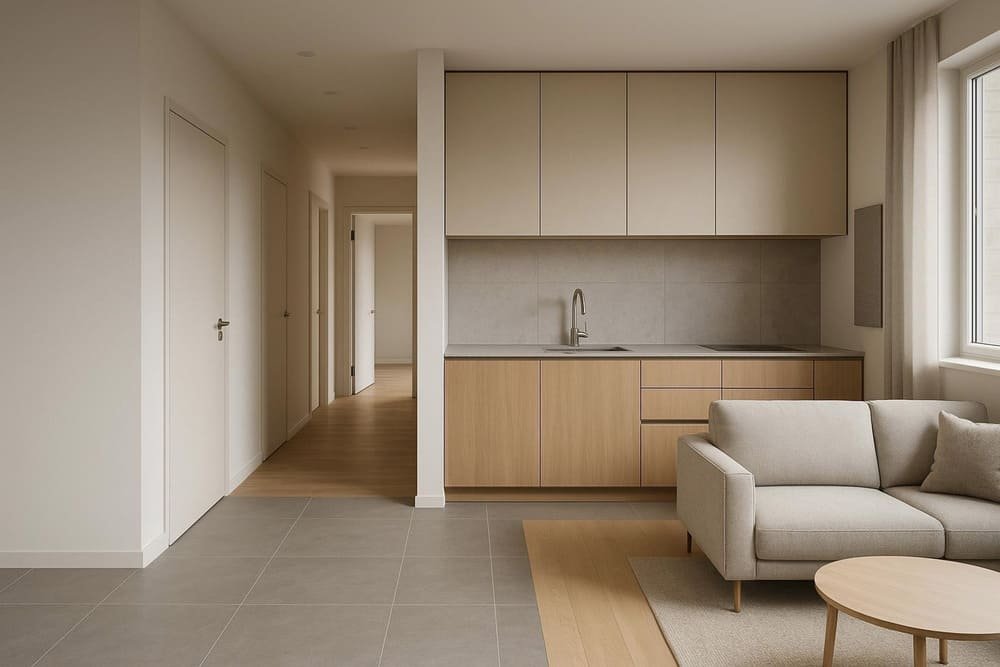
If you furnish and turn hundreds of units a year, the best apartment interior design trends in 2026 aren’t just about looks—they’re about durability, cleanability, indoor air quality, and predictable lead times.
The list below ranks 15 material-forward directions that are working right now in multifamily. Each item includes spec hooks (standards/tests/certifications), lifecycle and maintenance notes, and where it performs best.
Our selection criteria: capability match for multifamily (30%), durability and maintenance (25%), IAQ and transparency (20%), value and lead times (15%), and evidence quality (10%).
The 2026 material trends that matter for multifamily
1) Low-emission certified interior materials (GREENGUARD Gold/FloorScore)
Healthier air in small apartments matters more than ever.
For paints, flooring, adhesives, and composite products, request low-emission certifications in submittals and keep the paperwork on file.
GREENGUARD Gold verifies low chemical emissions via chamber testing aligned with California’s CDPH method; see the program overview in UL’s GREENGUARD explainer (2024–2025).
For hard-surface flooring and related adhesives/underlayments, SCS Global Services’ FloorScore page (2025) outlines the VOC emissions testing used by LEED and WELL.
Pros: supports IAQ policy, simplifies compliance reviews, often minimal cost premium.
Cons: not all categories carry both labels; verify scope and product lists.
Best for: everywhere—units and amenities.
Pricing: certification itself doesn’t dictate price; expect “from” parity to modest premiums, subject to change.
2) Rigid core SPC with 20–22 mil wear layers (ASTM F3261)
SPC (stone polymer composite) holds up to move-ins, pets, and rolling loads when you specify it like a contract floor.
Anchor the product to ASTM F3261 (2025 overview) and require a wear layer of 20–22 mil (0.5–0.55 mm) with test references (ASTM F410 for wear layer thickness), plus dimensional stability (ASTM F2199) and residual indentation (ASTM F1914).
Pros: fast installs, plank replacement saves turns, high dent resistance.
Cons: acoustics need an assembly (underlayment/slab), heat limits near windows—check TDS.
Best for: living/bedroom areas in stick-built and podium projects; avoid direct radiant heat zones without manufacturer approval.
Pricing: from mid-tier LVT; 20–22 mil usually carries a modest premium, subject to change.
3) Porcelain tile with A326.3-tested DCOF and ISO 10545-7 abrasion classes
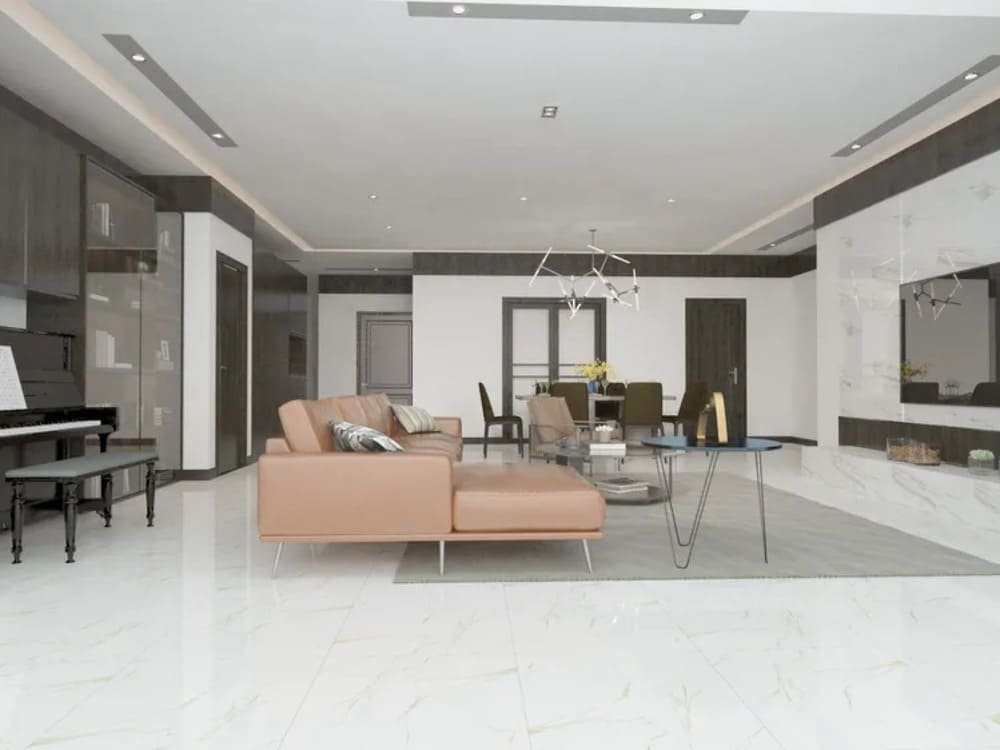
In wet zones and heavy-traffic entries, porcelain is still the benchmark.
Specify dynamic coefficient of friction testing per TCNA’s ANSI A326.3 resource (2025) and request ISO 10545-7 abrasion wear class for glazed products.
There isn’t a universal “safe” DCOF number; performance depends on texture, drainage, contaminants, and maintenance.
Pros: long service life, easy sanitization, minimal staining in matte textures.
Cons: grout care and slip-risk management require operator attention; tile setting drives schedule.
Best for: baths, laundry, kitchens, corridors.
Pricing: from value 12″×24″ lines upward; large-format and through-body options add cost, subject to change.
4) Large-format porcelain and sintered slabs (low-seam walls and counters)
Fewer seams mean faster cleaning and fewer bacteria traps.
Sintered/porcelain slabs and large-format tiles (e.g., 30″×60″ and larger) deliver stone looks with lower porosity.
Pair with manufacturer EPD/HPD where available, and coordinate handling/rigging plans with installers.
Pros: low-maintenance, consistent patterning, premium perception.
Cons: specialized fabrication/handling, higher first cost.
Best for: amenity kitchens, backsplashes, shower walls.
Pricing: from mid-high depending on thickness and brand; fabrication complexity drives variance.
5) Engineered quartz and quartzite counters (clear hardness and care expectations)
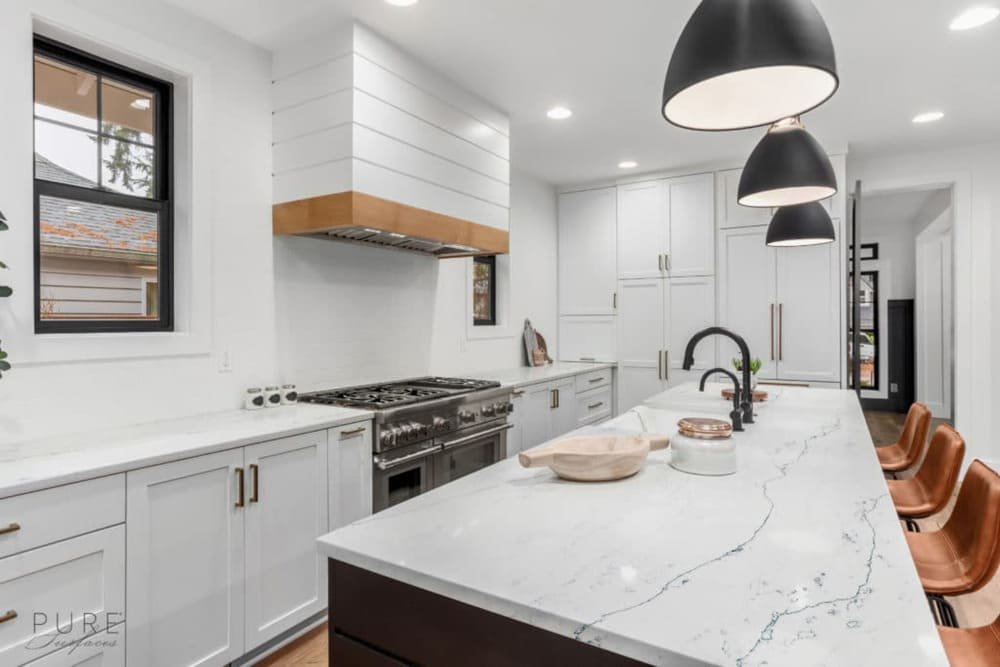
For counters, set expectations by hardness and maintenance.
Engineered quartz is durable and consistent; natural quartzite offers high hardness (quartz is ~7 on the Mohs scale) with unique veining.
Remember: Mohs values are mineral-based and rock hardness varies by composition; use them as guidance rather than absolutes.
Pros: strong scratch resistance, predictable maintenance.
Cons: resin binders in engineered quartz can discolor with extreme heat; natural stones need sealing and care.
Best for: kitchens and vanities with defined hot-pan rules and trivets.
Pricing: from mid-tier engineered slabs; natural quartzite often higher, subject to change.
6) High-pressure laminate and compact laminate to NEMA LD 3
HPL remains the workhorse for doors, casework, and worktops when specified against performance tests.
Look for conformance to NEMA LD 3 (light resistance, cleanability, stain/scratch/impact, boiling water/high-temperature). Manufacturer technical data sheets commonly cite LD 3 performance.
Pros: wide design range, cost-efficient, proven durability; compact laminate adds water resistance.
Cons: edge protection is key; avoid high-heat edges without guards.
Best for: cabinet fronts, closet systems, laundry rooms, study nooks.
Pricing: from entry to mid; compact/phenolic cores cost more, subject to change.
7) KCMA/ANSI A161.1-certified modular cabinetry
Cycle-tested cabinets reduce service tickets. Require certification to KCMA/ANSI A161.1 and verify the label on submittals—KCMA’s certification program overview (2024–2025) explains durability testing for doors, drawers, finishes, and construction.
Pros: predictable performance in rentals, easier vendor comparisons.
Cons: limited design flexibility at the lowest price tiers.
Best for: unit kitchens and baths; consider plywood boxes in wet-prone areas.
Pricing: from value modular lines; upgrades (plywood, premium hardware) add cost, subject to change.
8) PET felt acoustic panels with tested NRC assemblies
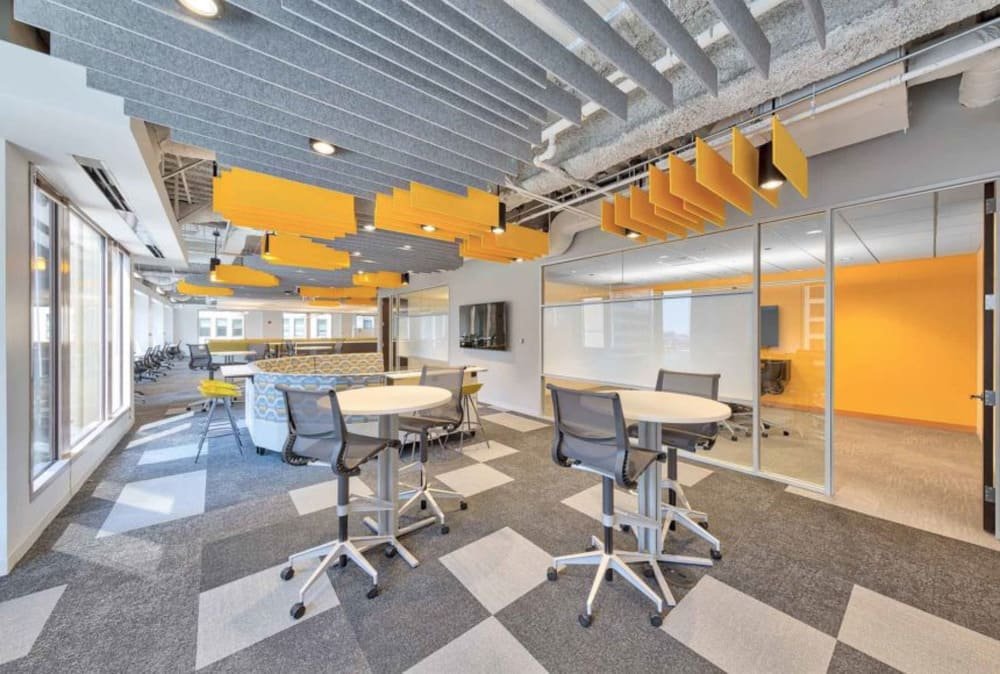
Noise drives churn. PET felt panels and baffles can reach NRC ~0.7–0.9 depending on thickness, density, and mounting.
Specify assemblies with test reports using ASTM C423 (reverberation room) and state the mounting condition and air gap. For a plain-language primer on ratings, see National Gypsum’s NRC explainer (2024).
Pros: quick upgrades for amenities, lightweight, recycled content options.
Cons: not a substitute for wall/ceiling STC assemblies; can show dirt in high-touch areas.
Best for: co-working lounges, mail rooms, fitness studios, leasing offices.
Pricing: from commodity 9–12 mm panels; custom cuts and prints add cost, subject to change.
9) Low-/zero-VOC paints and sealants with recognized ecolabels
Follow federal procurement best practice by using recognized ecolabels/specs when practical. EPA maintains the Recommendations of Specifications, Standards, and Ecolabels for Federal Purchasing (2025) and model contract language for interior latex paint.
Pros: lower odor during turns, aligns with sustainability goals.
Cons: verify coverage/hide in field mockups; not all labels cover every performance attribute.
Best for: unit interiors and corridors.
Pricing: from standard contractor-grade; low-/zero-VOC lines often at parity today, subject to change.
10) PVD-coated faucets and hardware
Color-consistent metals without quick wear: physical vapor deposition (PVD) adds a thin, hard, corrosion-resistant layer that resists scratching and tarnish better than many plated finishes. Request salt-spray, adhesion, and hardness test results in submittals.
Pros: longer finish life in rentals, cohesive palette options (brushed nickel, warm golds).
Cons: higher first cost than commodity plating; verify base metal quality.
Best for: faucets, shower trim, door levers across unit finishes.
Pricing: from mid-tier fixtures; PVD finish adder varies by brand, subject to change.
11) Terrazzo systems for lobbies and high-traffic corridors
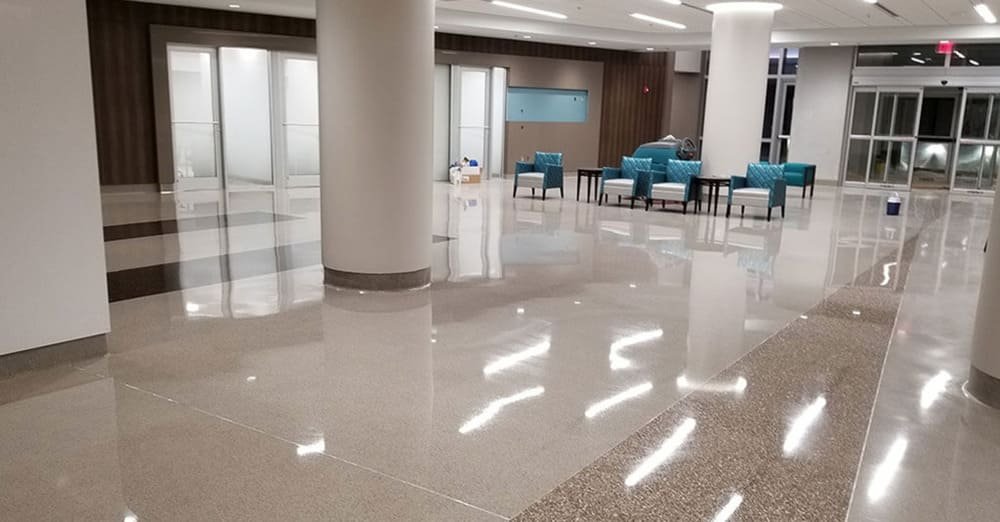
When you model lifecycle cost, poured-in-place epoxy terrazzo often pencils out in high-traffic amenities versus carpet or VCT. The National Terrazzo & Mosaic Association outlines system families and applications in NTMA’s specification guides (2024–2025).
Pros: long service life, seamless cleanability, repairable; striking design potential.
Cons: higher upfront cost, specialized installers.
Best for: lobbies, elevator lobbies, mail rooms, club entries.
Pricing: from premium; lifecycle savings realized over years via reduced replacements, subject to change.
12) Cork and bamboo with FSC chain-of-custody (where applicable)
Renewable options can work in controlled conditions.
For bamboo and cork, ask for FSC chain-of-custody documentation where product claims are made, and pair with FloorScore/GREENGUARD adhesives and finishes.
Manage moisture carefully; specify tested acoustic underlayment assemblies for IIC/STC.
Pros: warm underfoot, bio-based story, solid acoustic absorption for wall applications.
Cons: moisture sensitivity and edge wear in hard-use areas; maintenance discipline required.
Best for: accent walls, low-moisture living areas in select buildings.
Pricing: from mid-range; factory-finished, higher-density products cost more, subject to change.
13) Antimicrobial claims: keep them compliant and honest
If you purchase “antimicrobial” surfaces, ensure claims don’t overreach. In the U.S., treated articles can only claim product protection; public-health protection claims require registration and efficacy data. Require vendors to align with EPA guidance on treated articles and antimicrobial testing.
Pros: protects the product surface itself in certain conditions.
Cons: can create compliance risk if marketed as protecting occupants; may add cost without operational benefit.
Best for: high-touch accessories where claims are limited and supported.
Pricing: varies widely; treat as a feature adder, subject to change.
14) Prefab shower panels and bathroom pods to compress schedules
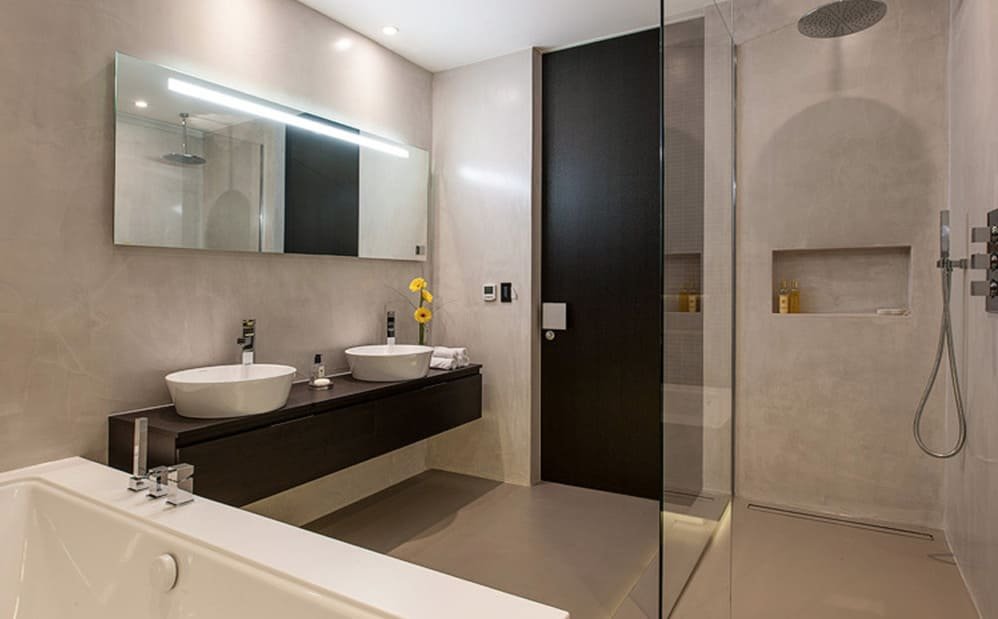
A 2026 bright spot: factory-built wet areas. Solid-surface or laminated shower panels replace tile and cut install time; full bathroom pods can shift most trades off-site.
Industry and institute materials report significant schedule compression when pods are used, often installing in hours once delivered.
Pros: faster cycles, consistent QA, fewer trades stacking on site.
Cons: early design sop sets and crane/MEP coordination; repair strategies must be defined.
Best for: mid-rise and high-rise with repetitive unit types.
Pricing: from moderate for panels to higher for pods; savings realized in schedule and labor, subject to change.
15) Natural stone by application: set hardness and care expectations
Stone remains desirable, but right-sizing the species matters.
Softer stones like marble (calcite-dominant) scratch and etch more easily than harder options; granites and quartzites trend significantly harder due to quartz/feldspar content.
Use Mohs hardness as a directional guide and pair with care instructions and sealing schedules.
Pros: timeless look, unique slabs.
Cons: variable performance, maintenance burden in rentals if misapplied.
Best for: vanities and feature walls; use harder stones or engineered surfaces for kitchen worktops.
Pricing: from mid-high depending on quarry and finish; fabrication and thickness drive variance.
Submittal checklist for multifamily teams (2026)
| Item | What to request | Why it matters |
|---|---|---|
| IAQ for flooring/adhesives | GREENGUARD Gold or FloorScore certificate and CDPH test report (if available) | Low emissions help tenant comfort and lease-up perception |
| SPC resilient | ASTM F3261 conformance; wear layer (ASTM F410), stability (F2199), indentation (F1914) | Durability and dimensional control |
| Tile floors | ANSI A326.3 DCOF test report; ISO 10545-7 wear class for glazed | Slip performance context + abrasion class |
| Cabinets | KCMA/ANSI A161.1 certification | Cycle-tested durability |
| Acoustic panels | NRC per ASTM C423/ISO 354 with mounting detail | Predictable sound absorption |
| Paints | Ecolabel per EPA Recommendations; performance TDS | Low odor, verified performance |
| Metals (PVD) | Salt spray, adhesion, hardness tests | Finish longevity in rentals |
| Prefab wet areas | Shop drawings, QA logs, interface drawings | Install speed and coordination |
Sourcing and next steps
- Pilot before you roll: mock up one or two units with the 2026 spec package, then track punch, clean time, and resident feedback for 60–90 days.
- Write the maintenance plan into the spec: if a surface needs sealing, state the interval and who does it. No surprises for operations.
- Lock submittals early: ask for certificates and test reports with the first package so your team isn’t scrambling at turnover.
- For China-based procurement at scale, teams often engage a vetted aggregator to consolidate categories, confirm certifications, and manage logistics. One example is China-based sourcing support for apartment finishes. Disclosure: ChinaBestBuy is our product. Keep the relationship neutral and documentation-heavy—factory QC logs, pre-shipment inspections, and samples on every finish change.
Looking for the practical edge in apartment interior design trends 2026?
Focus on materials you can verify on paper and maintain in the field.
If you set clear performance targets (tests, certs, care) and pilot them before rollout, you’ll turn faster, reduce tickets, and keep units feeling fresher longer.
Ready to build your 2026 spec package?
Start with two or three of the items above and run a timed mock-up—you’ll know quickly what scales across your portfolio.