7 Tips for Choosing the Perfect Hotel Room Decoration Service
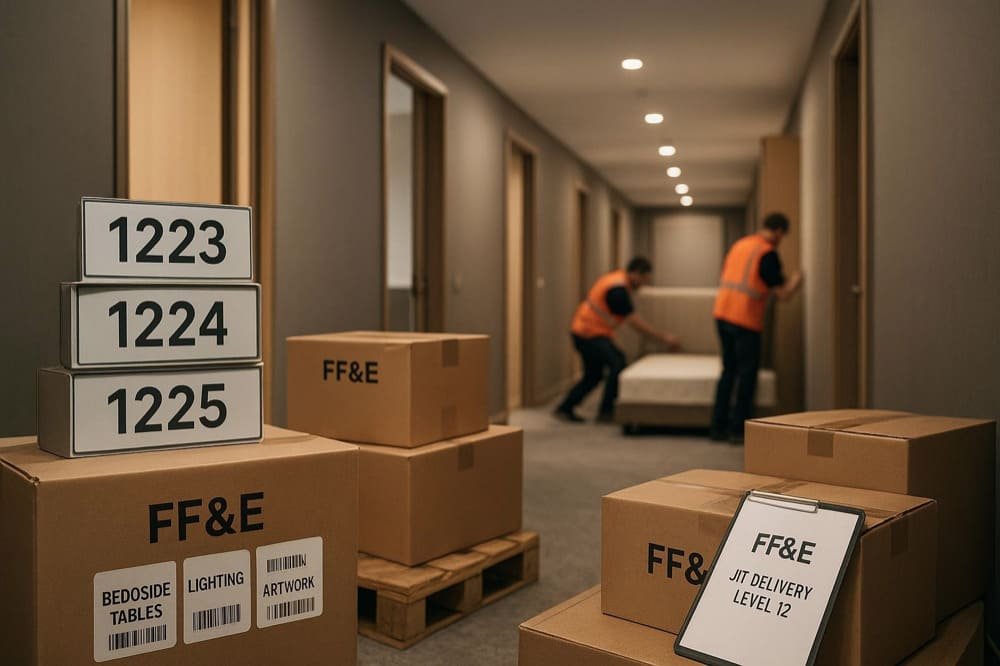
When you’re accountable for opening dates, hotel room decoration isn’t throw pillows—it’s a turnkey fit-out scope: design coordination, FF&E procurement, international logistics, and installation sequenced room by room.
The right partner keeps your critical path intact across multi-room and multi-property rollouts.
The wrong one introduces rework, customs holds, and idle crews.
Below is a practical, selection-first framework I use when prequalifying and contracting vendors for guest-room programs.
Every tip focuses on schedule certainty—how to prevent slippage and finish rooms ready for revenue.
1) Prequalify for multi-property capacity and a verifiable on-time record
You need a partner that can scale without losing schedule discipline. Ask for proof of capacity (factory throughput, installer headcount, bonded logistics, consolidation hubs) and how they govern time.
What to verify for schedule protection:
- Critical Path Method (CPM) rigor: Request a sample baseline and two update cycles linked to milestones and retainage. The Construction Management Association of America outlines why CPM clarity and update cadence reduce disputes and delays; see CMAA’s guidance in 2024–2025 on schedule governance in the brief, Top Three Impacts on CPM by CMAA (2024).
- Performance security and flow-down: For multi-property scope, confirm performance bonds or parent guarantees and that schedule obligations flow down to key FF&E suppliers. For context on when and how performance bonds mitigate delivery risk, see JDSupra’s performance bond primer (2024).
Best-for: Programs with simultaneous or back-to-back openings. Not-for: One-off boutique refits where in-house PM can absorb risk.
2) Contract for schedule certainty: LDs, incentives, and milestone clarity
Your contract is a schedule tool. Define Substantial Completion, tie payments to milestones, and use both carrots and sticks properly.
Practical inclusions:
- Liquidated damages (LDs) and early-finish incentives with objective triggers. For enforceability and how Substantial Completion is typically defined, see JDSupra’s Substantial Completion overview (2024) and an LDs legal primer from AGC CLE materials (2023).
- Baseline CPM, monthly updates, and milestone-linked retainage to keep progress aligned with opening dates. CMAA’s 2024 note on CPM impacts is a useful checklist—referenced above.
- Flow-down of schedule clauses and LD exposure to major FF&E vendors and installers so third-party slippage isn’t your sole burden.
Trade-off: Strong LDs deter delay but may raise price; balanced incentives can offset that.
3) Lock design early with mockups and shop drawings before production

Rework kills schedules. Insist on a structured approval sequence that freezes design details before factories commit.
Actions that save weeks:
- First-article mockups of critical FF&E (casegoods, headboards, lighting) with photographed sign-offs and a single source of truth for comments. Hospitality procurement leaders emphasize this discipline; see the Beyer Brown “FF&E Procurement: Comprehensive Guide” (2023) for how mockups and approvals reduce risk. Curve Hospitality provides complementary context on approvals in its guide as well.
- Shop drawings with hardware, finishes, clearances, and installation details; release to production only after formal approval dates are logged and communicated to logistics.
Best-for: Brand-standard rooms with tight tolerances. Watch-out: Over-specifying prototypes can add cost—focus on items with the highest replacement pain.
4) Control submittals and QA like a scheduler, not a stylist
Submittals pile up fast—finishes, fabrics, lighting certifications, fire ratings, packaging specs. A loose process drifts into the critical path.
How to stay ahead:
- Build the submittal log in week one and backward-schedule from Required On-Site Dates. Autodesk’s construction team outlines templates and parallel review practices in “Submittals: Template and Best Practices” (Autodesk, 2024).
- Run weekly look-aheads with design, procurement, and site to flag long-lead items and clarify who’s on the hook for responses.
- Standardize reviewer checklists to avoid conflicting comments that trigger resubmittals.
Outcome: Fewer RFIs, fewer reships, tighter install windows.
5) Master international logistics: kitting, consolidation, Incoterms, and customs

Most “decoration” delays come from the ocean, not the room. Your vendor must turn a global supply chain into room-ready deliveries.
What to require and why it matters:
- Room-ready kitting and consolidation: Hospitality logistics specialists describe “room-in-a-box” kitting, warehouse consolidation, and sequenced delivery to reduce on-site stoppages. See Suddath’s Hospitality Logistics & Project Management page (2025) for how kitting, labeling, and installation services align with hotel phasing.
- Incoterms 2020 strategy: The Incoterms choice determines who owns export/import formalities, risk transfer, and the levers to resolve port delays. Align terms with your customs broker and visibility needs; the International Chamber of Commerce’s hub explains responsibilities and trade-offs—start with ICC’s Incoterms 2020 overview (2025).
- Customs readiness: Confirm brokerage arrangements, power of attorney, tariff classification competence, and packaging/labeling formats (room/floor IDs, manifests). Test a sample Advance Shipping Notice (ASN) for data completeness.
Field tip: Ask to see a kitting label set (room/floor/stack IDs, barcodes) and a photo of a palletized “room kit.” If they hesitate, you’ve found a risk.
6) Plan installation like a hotel operator: room stacks, JIT, and phased blocks
In live hotels, phasing is everything. Even in new builds, elevator capacity and access paths dictate what “on time” means at the room level.
What good looks like:
- A room-stack plan (vertical by riser or horizontal by wing) with Just-In-Time delivery windows that match crane/elevator capacity and crew sizes.
- Coordination with operations for occupied renovations: quiet hours, protection paths, night/weekend shifts, and temporary storage. Experienced hospitality contractors publicly stress phased blocks and guest-impact minimization; while approaches vary by property, the pattern is consistent across reputable firms.
- Daily punch-and-protect: Close small defects before they cascade and guard finished areas from damage as adjacent rooms turn.
Result: Predictable, bite-sized completions that can be handed over to housekeeping and revenue teams sooner.
7) Close fast with digital punch, attic stock, and clear warranties
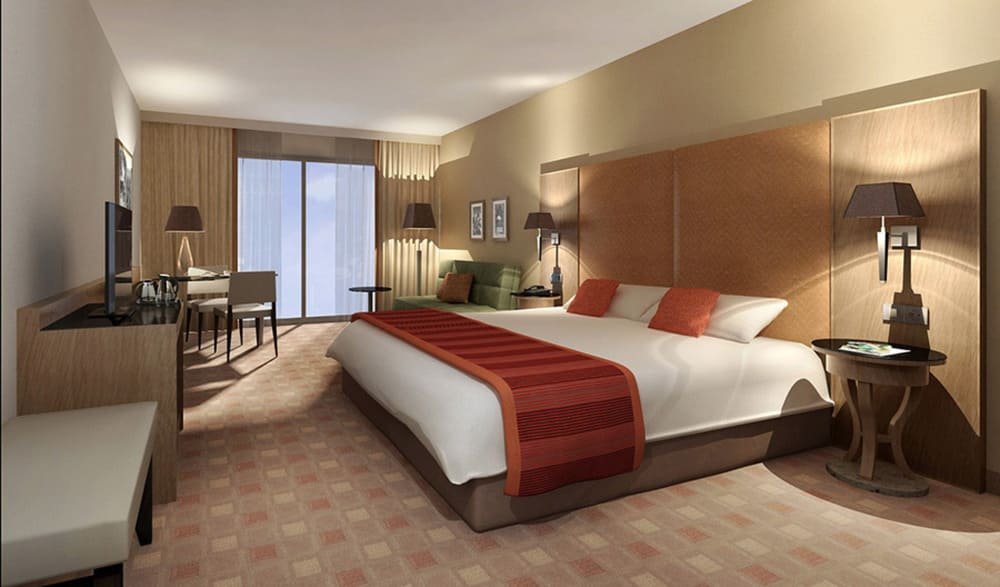
Closeout is where good schedules go to die. Digitize defects, pre-plan spares, and define aftercare so you don’t reopen rooms after opening.
Non-negotiables:
- Digital punch/snags: Mobile capture, assignment, and dashboards cut administrative drag and accelerate fixes. See PlanRadar’s overview of digital snag lists (2024) for how real-time tracking improves closeout.
- Attic stock: Hold spare fixtures and finishes to avoid long reorders during punch and early operations. “Attic stock” is a standard facilities concept; the Whole Building Design Guide documents it in signage and other specs—see WBDG signage guideline reference (2022). Apply the same logic to guest-room FF&E and lighting.
- Warranty clarity: Name the party responsible for defects (fabricator vs. installer), define response times, and record serials/batches during installation.
Best-for: Multi-property rollouts where uniformity and repeatable fixes save weeks.
Quick interview checklist (one ask per tip)
| Tip | One question to ask your vendor |
|---|---|
| 1. Capacity & track record | “Show two CPM updates from a recent multi-property rollout—what slipped, why, and how you recovered.” |
| 2. Contract & milestones | “How do your LD and incentive clauses flow down to your FF&E suppliers and installers?” |
| 3. Mockups & approvals | “Which room items will you prototype first and what’s the approval workflow and timeline?” |
| 4. Submittals & QA | “Share your submittal log template and the look-ahead process for long-lead items.” |
| 5. Logistics & customs | “Provide a sample ‘room kit’ label set and ASN; which Incoterms do you recommend and why?” |
| 6. Installation & phasing | “Walk through your room-stack plan and JIT windows relative to our elevator/crane constraints.” |
| 7. Closeout & aftercare | “What digital punch tool do you use, how do you track attic stock, and what are your warranty response times?” |
Practical next steps
- Build your RFP around these seven headings and require document samples: CPM baseline/updates, mockup photos, submittal log, kitting labels, room-stack plan, and a sample warranty. Think of it this way: if they can’t show the system, they probably won’t run it.
- Pilot with one floor or a short wing to validate kitting and install cadence before greenlighting mass production. You’ll surface bottlenecks without risking the whole schedule.
Disclosure—ChinaBestBuy is our product. If you need a China-side sourcing/logistics partner to support FF&E procurement and room-ready kitting within a turnkey team, consider reviewing the capabilities at ChinaBestBuy alongside other vetted providers. We encourage comparing multiple partners and requesting evidence-based rollouts.